




Fine Ceramics, sometimes referred to as "advanced ceramics," are engineered materials that support the development of cutting-edge technology.
Chemistry and Medical Care (1)
Highly Resistant to Chemicals
Fine Ceramics (also known as "advanced ceramics") possess high levels of chemical stability. As a result, Fine Ceramic materials are highly resistant to chemical corrosion.
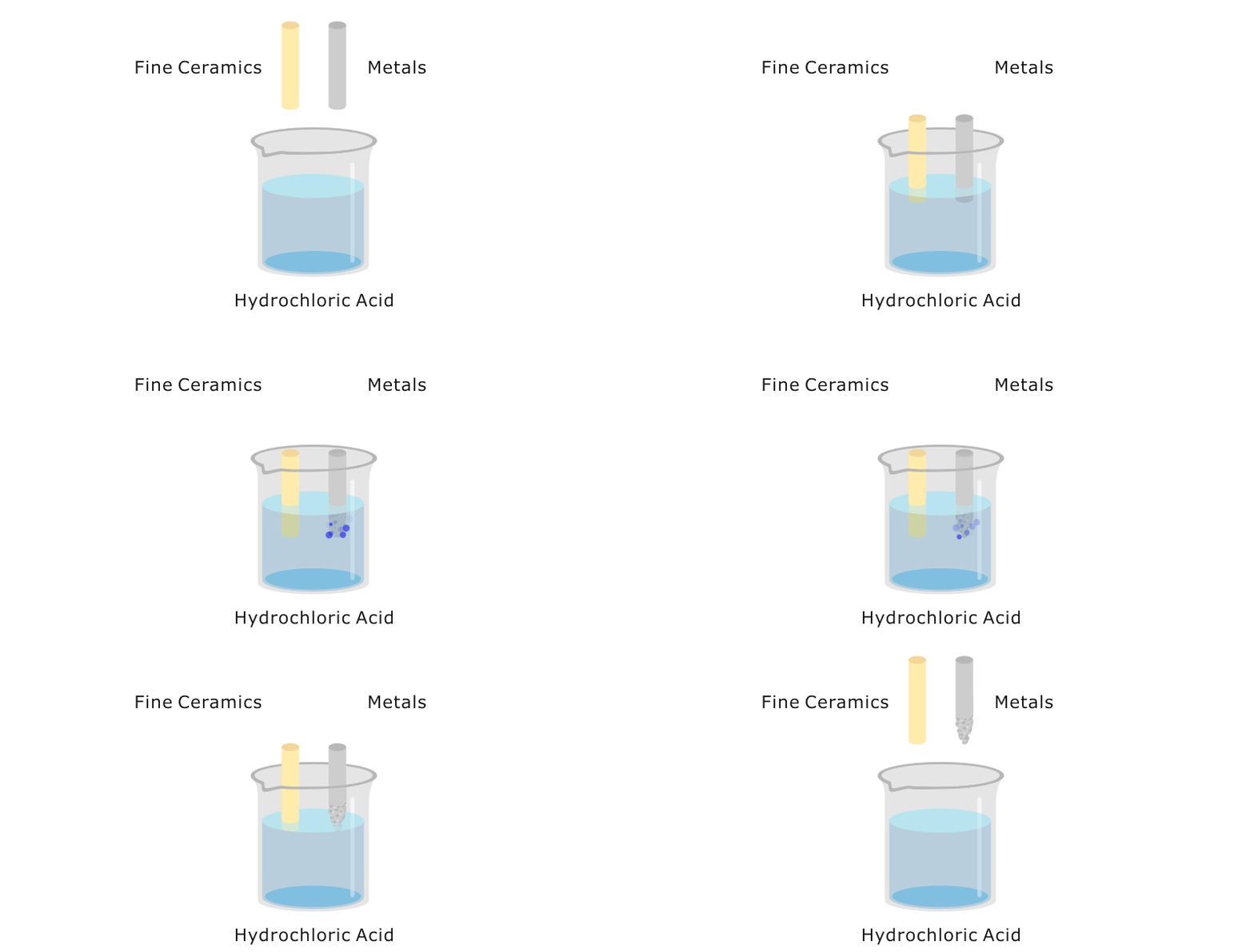
Watch this video to learn about the Chemical Resistant properties of Fine Ceramics
Applications: Valves, devices and pump components for fluid handling and chemical processing applications in chemicals factories; Fine Ceramic scissors.
Description
Chemical Resistance
Even the strongest materials may have their potential range of applications limited if they are susceptible to erosion by chemicals. Alumina and silicon carbide substances found in fine ceramics have particularly high resistance to chemicals (low chemical solubility) and will not change shape if soaked in an acid or alkali solution.
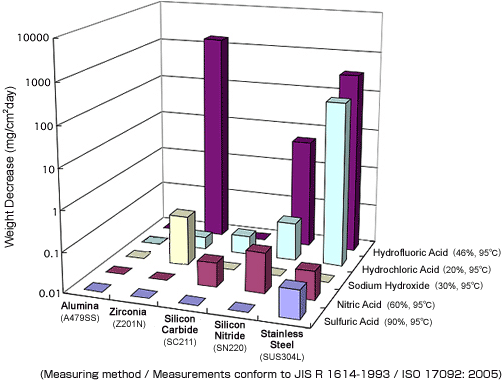
For more information, please see Excerpt of Graph Values.
The term "Fine Ceramics" is interchangeable with "advanced ceramics," "technical ceramics" and "engineered ceramics." Use varies by region and industry.



People who read this page also read.

Chemistry and Medical Care (2)
Chemistry and Medical Care (2)
Biocompatibility with Internal Chemistry of the Human Body
Biocompatibility with Internal Chemistry of the Human Body
Characteristics of Fine Ceramics
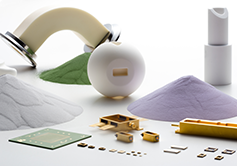
Different Types of Fine Ceramics
Different Types of Fine Ceramics
Wide Variety of Products to Support both Industry and Society
Wide Variety of Products to Support both Industry and Society
Introduction to Fine Ceramics
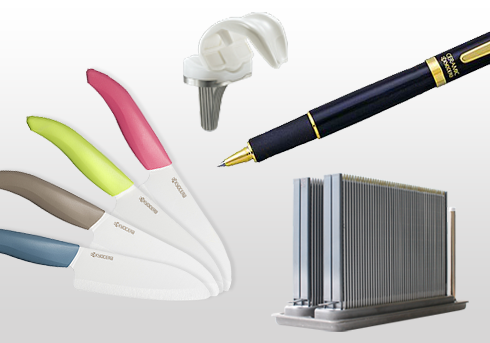
Fine Ceramics in Daily Life
Fine Ceramics in Daily Life
Contributing to Healthcare and the Environment
Contributing to Healthcare and the Environment
Learning about Fine Ceramics
If you want to use ceramics in business, click here.
Kyocera's Fine Ceramics products (All websites below open in a separate window.)
Product Category
 Semiconductor / LCD Processing Equipment
 Life / Culture / Industrial Machines
 Wireless Communications
 Computer Peripherals
 Environmental Preservation / Renewable Energy
 Medical Equipment / Devices
 Single-Crystal Sapphire Products
 Metallized / Vacuum Components
 Electronics Industry
 Heaters
 Piezoelectric Ceramics
Search by Material
 Alumina
 Silicon Nitride
 Silicon Carbide
 Sapphire
 Zirconia
 Cordierite
 Yttria
 Aluminum Nitride
 Cermet
 Mullite
 Steatite
 Forsterite
Search by Property/Characteristic


- Thermal Properties
- Coefficient of Thermal Expansion
- Thermal Conductivity
- Heat Shock Resistance

- Electrical Properties
- Insulation / Semiconductivity

- Chemical Properties
- Chemical Resistance
The Fine Ceramics World website is managed by Kyocera Corporation