


IDEA INCUBATOR
Pursuing a future where robots coexist with humans in factories and homes


"Humanoid robots, with their human-like forms and movements, are capturing global attention. They are no longer just maintaining their balance while walking on two legs; they are dancing, running, performing backflips, and even boxing with one another. Furthermore, in industrial settings such as factories and logistics warehouses facing labor shortages, these robots are beginning to be utilized for tasks like transporting parts and products to specific locations.
While some take a negative view and fear that robots might steal human jobs, there is another category of robotics gaining ground: mobile manipulator robots. These consist of a humanoid-like torso mounted on a wheeled base and equipped with mechanical arms (manipulators). Rather than seeking to replace humans entirely, the focus of these robots is on coexisting with people by collaborating with humans, who remain superior in terms of ingenuity and dexterity."
While some take a negative view and fear that robots might steal human jobs, there is another category of robotics gaining ground: mobile manipulator robots. These consist of a humanoid-like torso mounted on a wheeled base and equipped with mechanical arms (manipulators). Rather than seeking to replace humans entirely, the focus of these robots is on coexisting with people by collaborating with humans, who remain superior in terms of ingenuity and dexterity."

The Vast Potential of Robots: Inspired by Easing the Burden of Housework
“I originally became interested in robotics because I wanted to see if the burden of housework could be reduced. I felt that by using robots capable of responding flexibly to various tasks, rather than those limited to routine chores like cleaning or taking laundry out of the washing machine, we could move one step closer to a lifestyle where humans and robots live together, without completely replacing human work.”
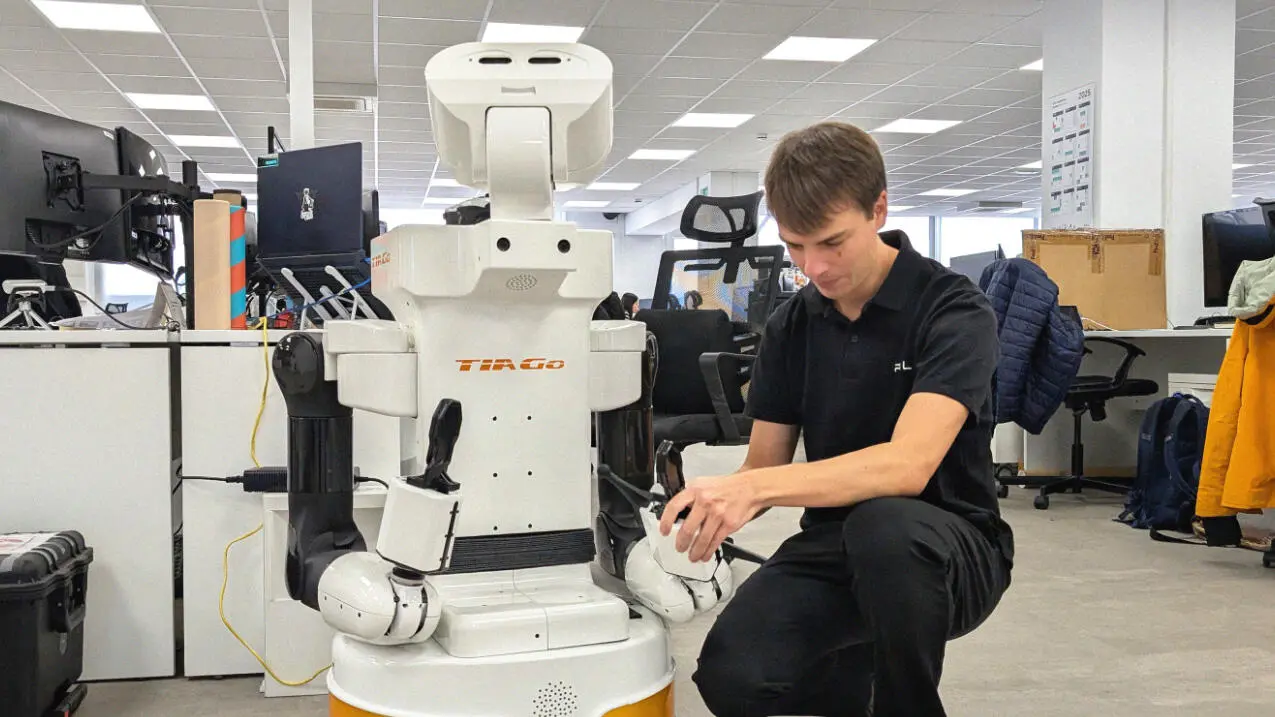
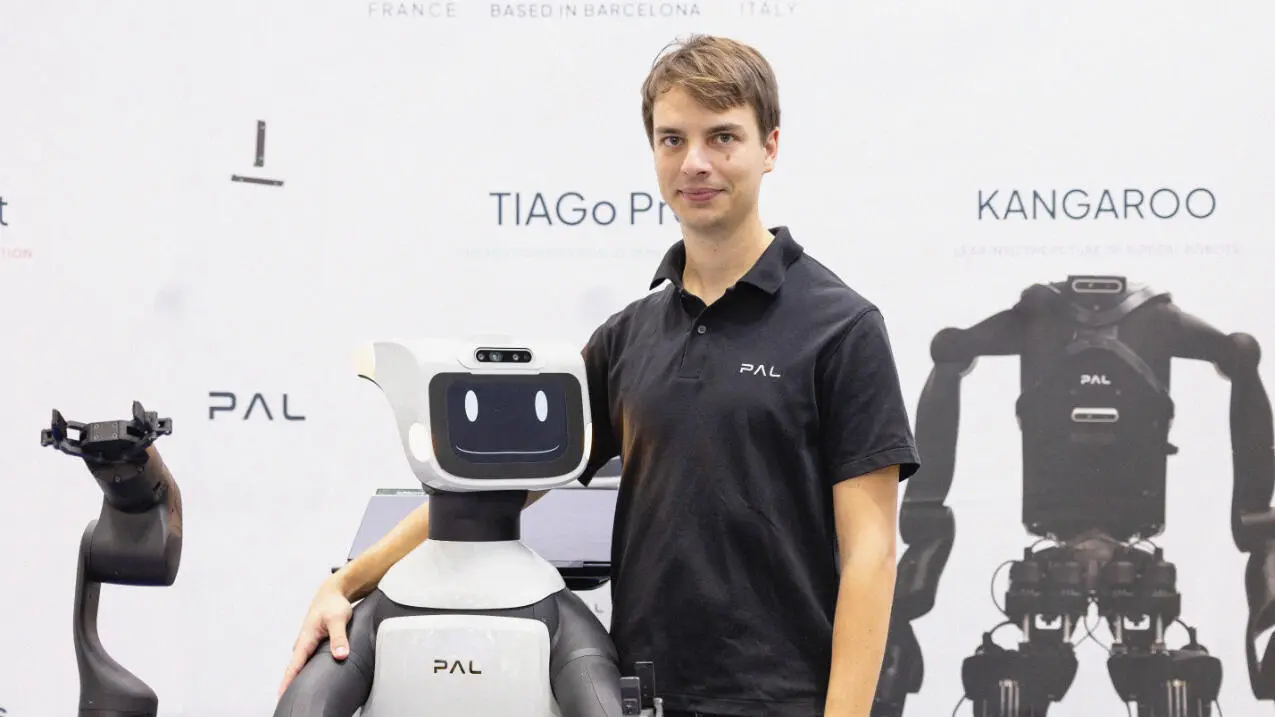
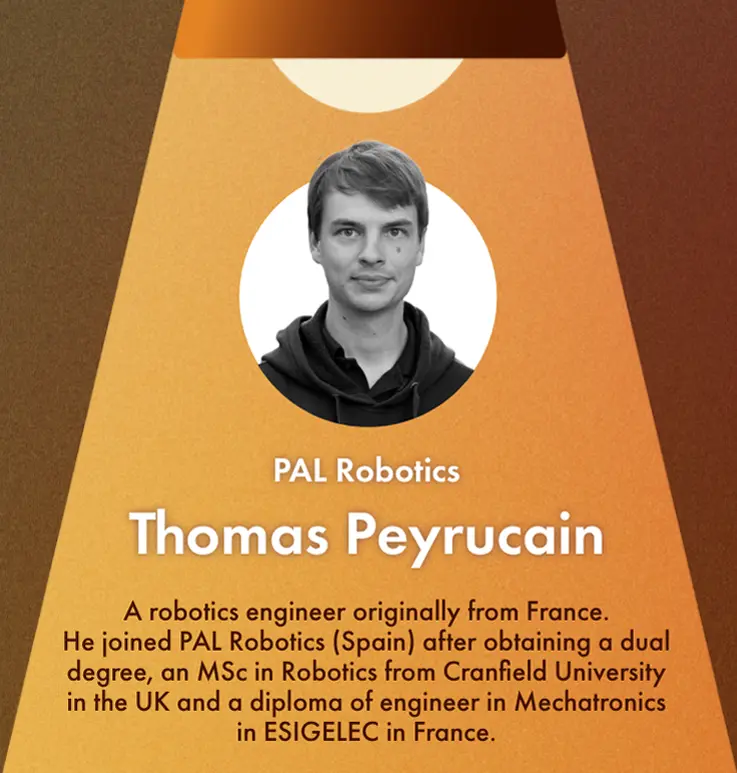
Thomas Peyrucain, a Technical Collaborative Project & Robotics Engineer who develops robots at a Spanish robot manufacturer PAL Robotics, in Barcelona, shares this vision for the ideal relationship between robots and humans. The robot he is working on is called TIAGo Pro. It features a unique design with a humanoid upper body mounted on a wheeled platform. Each of its two arms possesses seven joints (degrees of freedom), allowing it to dexterously grasp and carry objects using the hands at the end of its arms while in motion. The robot can also understand human speech. To facilitate easier communication, a screen on its head displays animated facial expressions that can change according to the conversation.
Although TIAGo Pro was primarily developed for industrial applications, Peyrucain notes that “home use is also one of our goals.” He adds, “In the near future, the introduction of robots into the home will progress. However, in a household environment where there are many uncertainties, safety measures for the robots are of the utmost importance, and a certification system to officially validate that safety is essential.”
From Housework to Aircraft Assembly: The Potential of Collaborative Robots
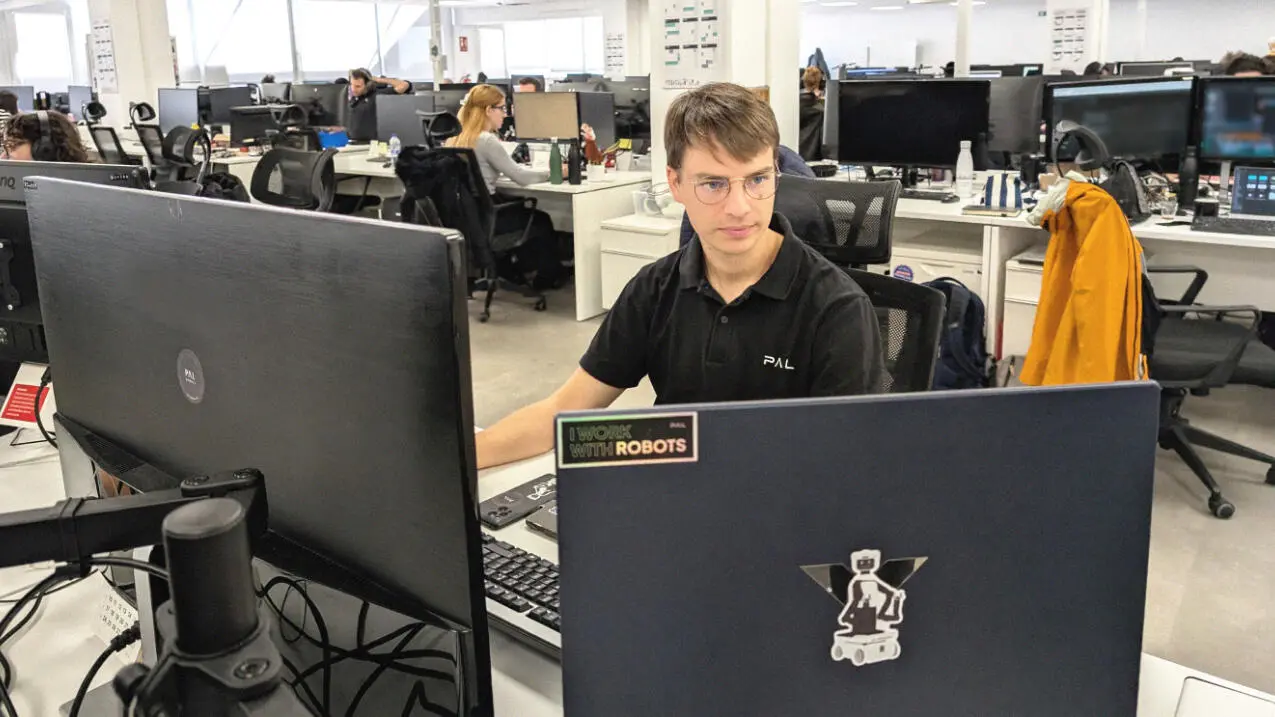
Before joining PAL Robotics in June 2021, Peyrucain had a fateful encounter with TIAGo, the predecessor to the current TIAGo Pro model. During his internships at a global aircraft manufacturer and at LAAS-CNRS (The Laboratory for Analysis and Architecture of Systems, French National Center for Scientific Research), he had the opportunity to work directly with TIAGo, saying he was “drawn to the platform.”
In the four and a half years since joining the company, he has been responsible for integration—incorporating the necessary hardware and software into the robot to ensure TIAGo Pro functions effectively for the specific use cases of the end customer, as well as providing on-site customer support. One ongoing use case involves an EU-funded project where TIAGo Pro is being used at an aircraft manufacturer’s assembly plant to perform deburring on holes drilled into the inner walls of aircraft fuselages.

Bringing Robots Closer to the Human Workspace
However, Peyrucain admits that in terms of deburring speed, robots still cannot match humans. “Humans excel at tasks that require this type of flexibility. Currently, the robot performs the work while in a fixed position, but we want it to be able to move autonomously and perform tasks without any loss in precision. For the time being, our goal is to reach a point where the robot can work at roughly the same speed as a human.”
Furthermore, a use case was implemented in a care facility where a robot patrols the rooms and triggers an alarm to call a nurse if it detects an abnormality. “With shortages in labor and healthcare professionals, robots are in high demand across various fields.” While acknowledging these pressing needs, Peyrucain is highly optimistic about the future of robotics, saying, “We have a lot of work to do, but it’s very exciting.”
SHARE


Latest Articles
-

KYOCERA TEACHES
Semiconductor back-end manufacturing overview
-

TRENDING TECH
Why fusion reactors need advanced ceramics
-

KYOCERA TEACHES
Front-end semiconductor manufacturing explained
-

KYOCERA TEACHES
Introduction to Fine Ceramics
-

KYOCERA TV
Kyocera Teaches: How MEMS shape our world
-

KYOCERA TV
Kyocera Teaches: MEMS Actuation Methods