


IDEA INCUBATOR
Aspiring to be a pioneer in advancing the metal 3D printing industry
Metal 3D Printing, a technology that creates complex three-dimensional shapes without the need for molds or welding by melting metal powder with lasers, is reshaping manufacturing in industries such as aerospace. At Velo3D, a U.S.-based leader in the field, Gene Miller serves as Director of Applications Engineering. He emphasizes that making the most of 3D printing begins by carefully determining whether a part is truly suited for the technology. At the same time, he sees metal 3D printing as a way to move beyond conventional manufacturing methods, such as casting and machining, which are approaching their practical limits. With that belief, he works continuously to refine processes and help position metal 3D printing as a foundation for the future of manufacturing.
Captivated by laser metal melting
Raised in eastern Pennsylvania, once a thriving center of the steel industry, Gene studied mechanical engineering at Colorado State University. He did not originally set out to pursue a career in metal 3D printing. After graduating, he joined a casting company in Pennsylvania, where his father had also worked. There, under the guidance of a mentor with a Ph.D. in materials science, he learned extensively about metallurgy and casting. A turning point came when that mentor left the company to also join Velo3D. Gene's interview at Velo3D was a pivotal moment that ultimately led to his first encounter with metal additive manufacturing.
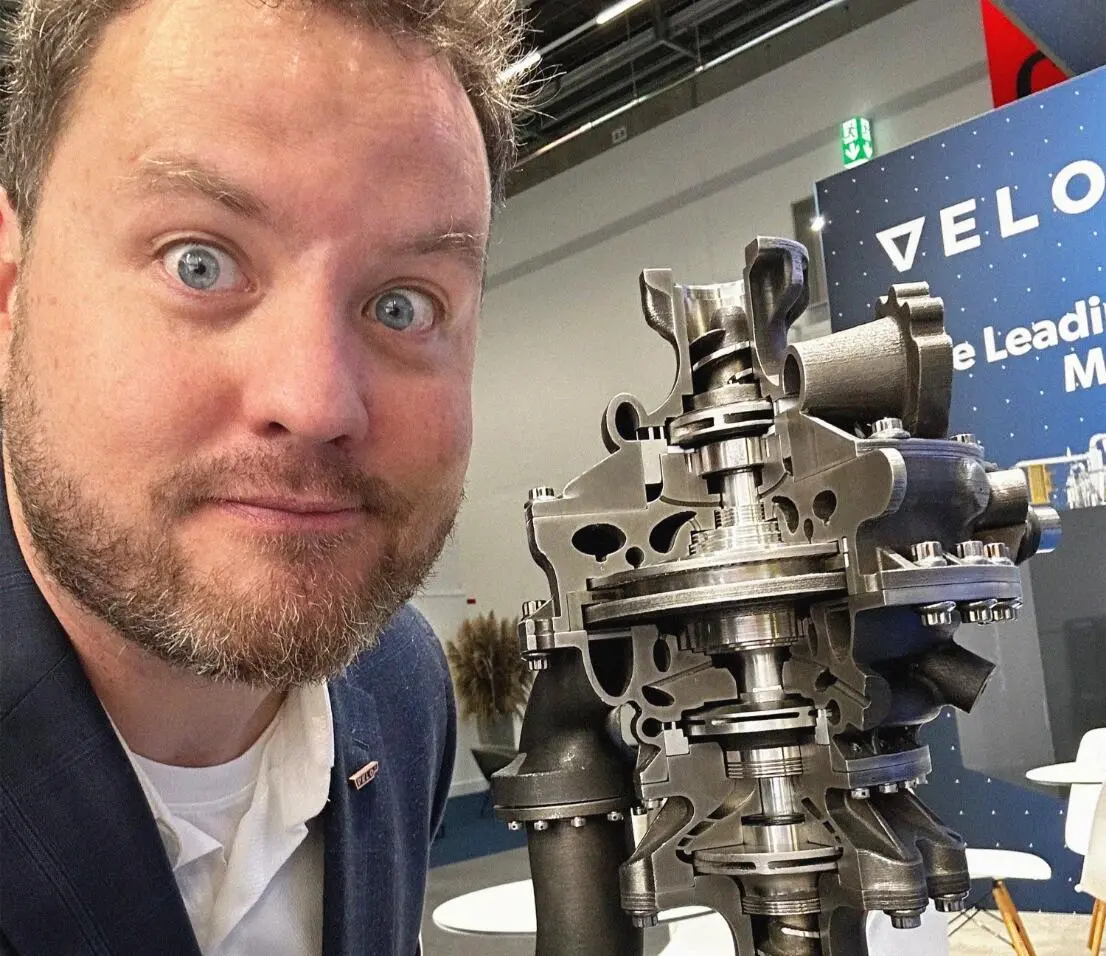
Gene recalls the moment: “Growing up in Pennsylvania, I initially felt intimidated by California, where Velo3D is based. It seemed like a big, unfamiliar place. At the same time, though, I was excited about the idea of trying something new.” When he visited Velo3D’s facility for the interview and saw a 3D printer melting metal powder with lasers, something clicked. “In that instant, I was completely captivated. I thought, ‘This is the coolest thing I’ve ever seen in my life. I want to work here.’”
Since joining the company, he has remained drawn to what he describes as metal 3D printing’s ability to produce exceptionally high-quality components. At the same time, he has sought to apply his own technical strengths as an engineer. “I come from a casting background, a process that has been used in manufacturing for a long time,” he says. “By combining my knowledge of casting with metal 3D printing, I believe we can bring the same level of stability and reliability to 3D printing. That’s how we can become a frontrunner in the industry.”
Working remotely from his home in Colorado
Like many engineers working at the forefront of a new technology, Gene has faced numerous challenges in metal 3D printing applications. One example involved Ti-6Al-4V (Ti64), a titanium alloy containing aluminum and vanadium. “We were manufacturing a large aerospace component that included thin-walled ducts using this material,” Gene explains. “During the build process, significant residual stress accumulated, which led to cracking.” After repeated testing and adjustments, the team identified a solution. “By introducing a laser strategy that reduced the cooling rate, we were able to mitigate the cracking.”
Gene encountered another challenge while 3D printing a rocket chamber, the combustion chamber of a rocket engine. Removing unmelted metal powder trapped inside the narrow channels on the back side of the chamber proved more difficult than expected. “As a solution, we decided to integrate KF fittings directly into the part and design it together with the piping as a single unit,” he explains. “After removing the printed component from the machine, we connected a compressed air hose to the integrated KF fitting. This allowed us to blow out all the remaining metal powder trapped inside the channels.”
Looking ahead, Gene hopes to become one of the pioneers helping to advance and grow the metal 3D printing industry. At the same time, he believes that meaningful progress comes from steady, deliberate effort. “To solve the challenges we face and expand the adoption of 3D printing in manufacturing, I believe the best approach is to move forward step by step and improve designs and manufacturing processes one at a time. That’s how we can make the greatest impact.”
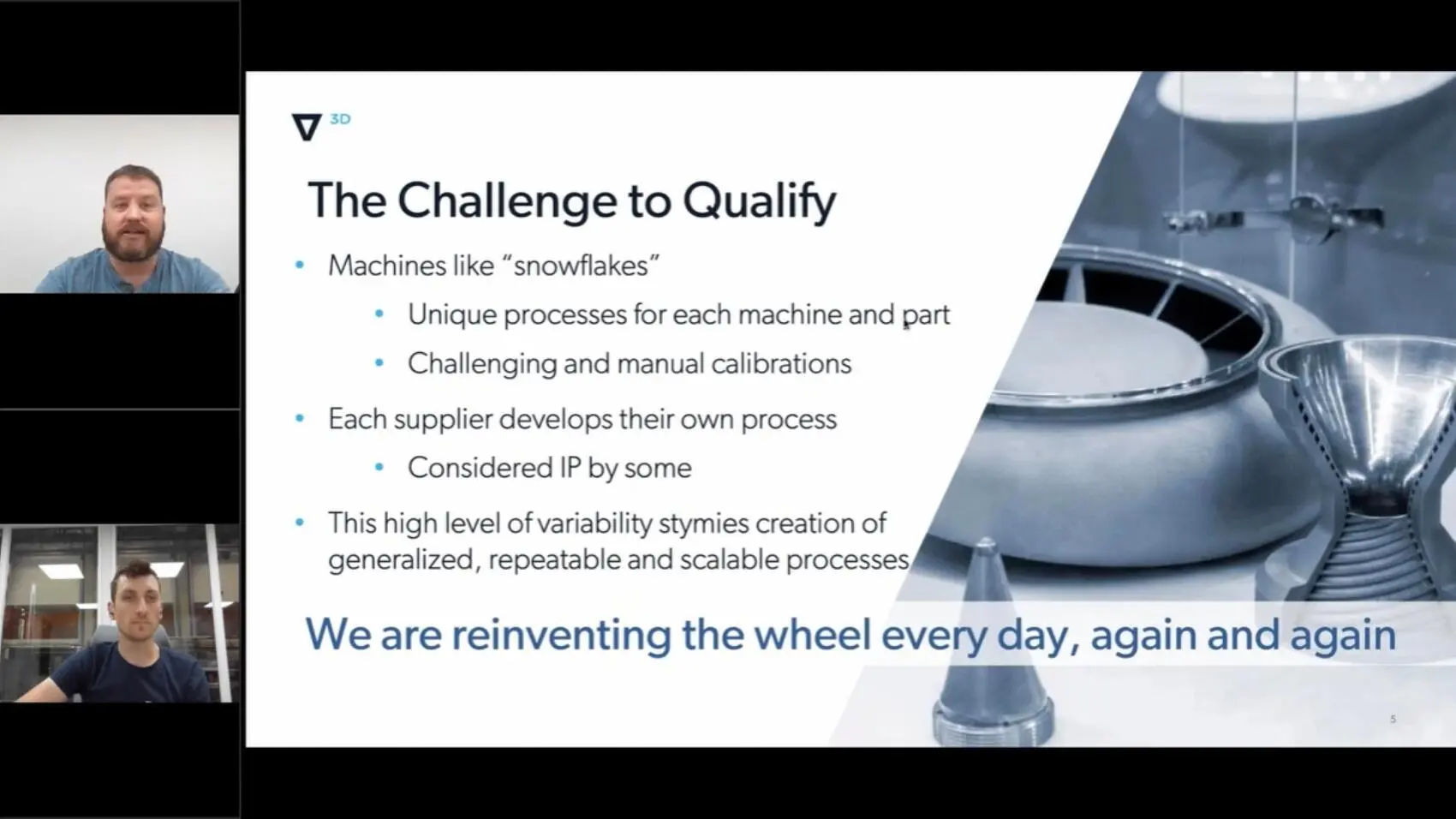
In fact, Gene works remotely from his home in Colorado. Does distance make engineering work more difficult? He offers a practical perspective. “Much of what we do as application engineers involves creating 3D print files on a computer, so we don’t necessarily need to be on-site,” he says. That said, he notes that the situation can be different for less experienced, junior engineers. “Understanding in advance how specific settings will affect the final part or drawing out a customer’s requirements for a component, these are skills that are often developed through hands-on experience in the field.”
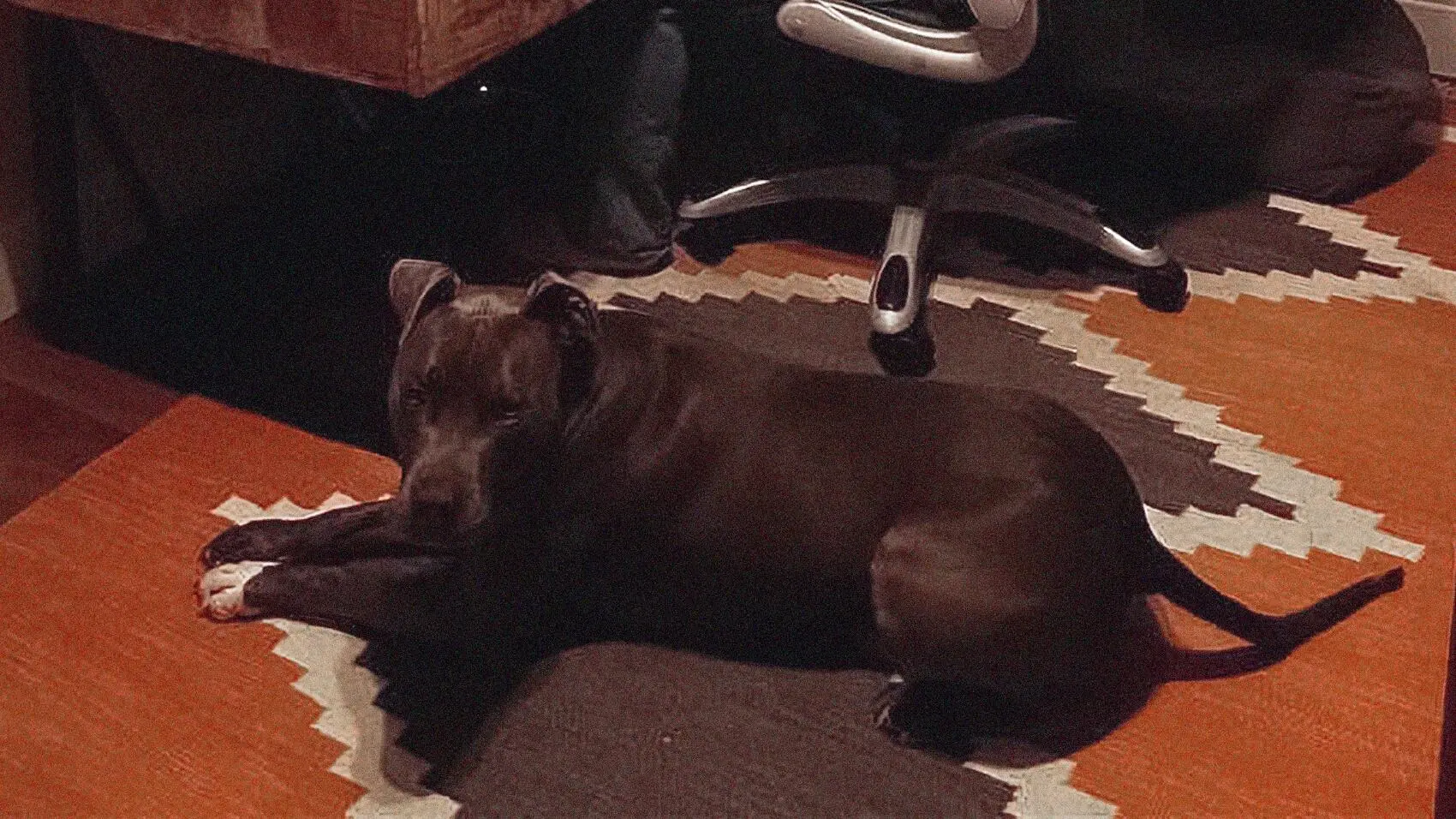
He also points out that communication tools such as Slack and Teams have made it easier to stay connected with the team, even while working remotely. “It feels almost like calling out to a colleague in the next cubicle,” he says. “Of course, there are moments when it can feel a little lonely. But these days, I have my best friend at home—Morty, my American Staffordshire Terrier.”
Have the right attitude, ethics, and work ethic
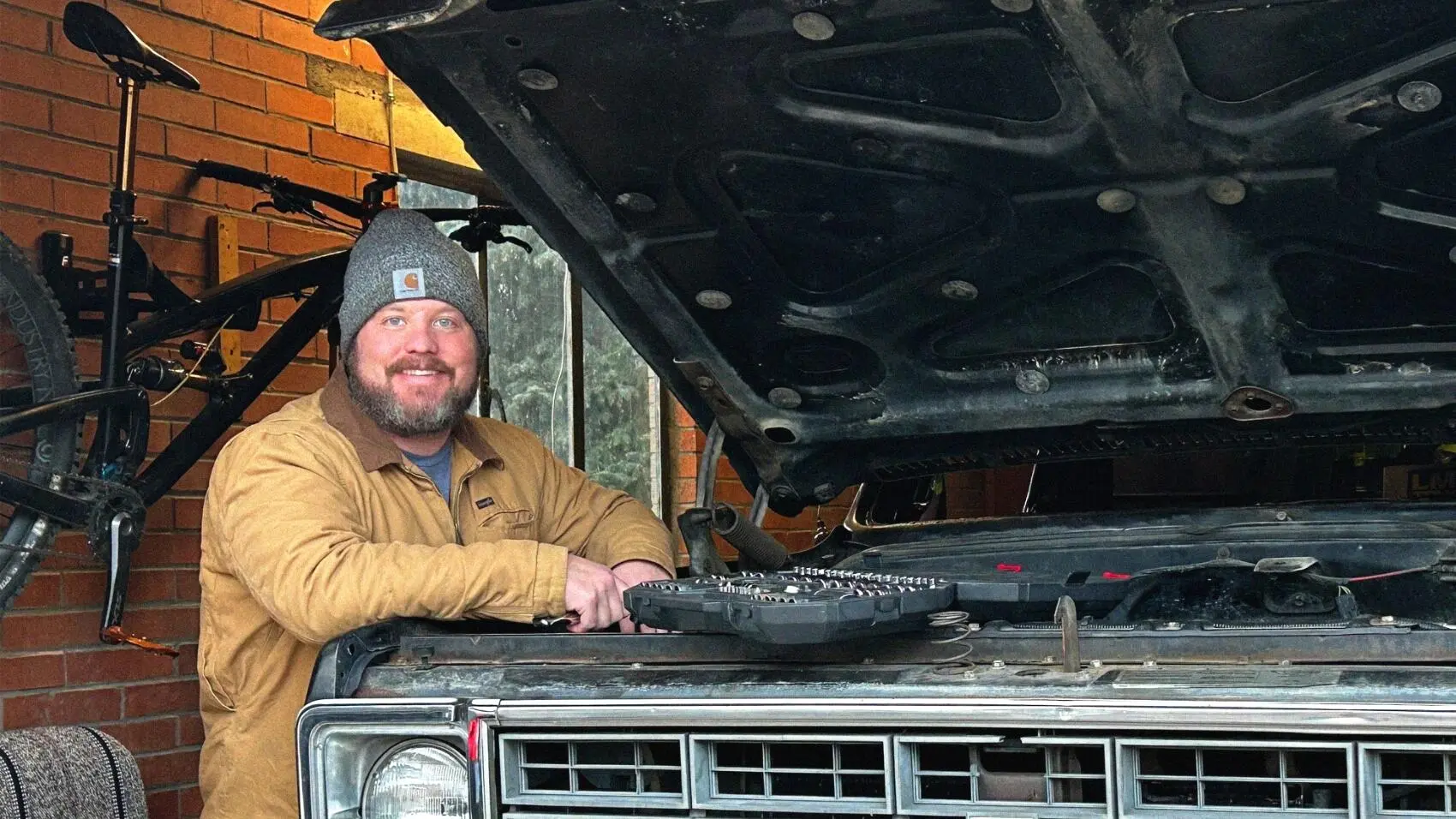
Gene admits that he was not an outstanding student. Even so, he reflects on what helped him grow. “If I hadn’t made a positive impression on my mentor at my previous job, I likely would never have been invited to interview here,” he says. “Having the right attitude, strong professional ethics, and a solid work ethic is extremely important. Those qualities allow you to build the experience, aptitude, and capability to ultimately become an engineer who can make a meaningful impact.”

SHARE


Latest Articles
-

KYOCERA TEACHES
Semiconductor back-end manufacturing overview
-

TRENDING TECH
Why fusion reactors need advanced ceramics
-

KYOCERA TEACHES
Front-end semiconductor manufacturing explained
-

KYOCERA TEACHES
Introduction to Fine Ceramics
-

KYOCERA TV
Kyocera Teaches: How MEMS shape our world
-
KYOCERA TV
Kyocera Teaches: MEMS Actuation Methods