



BIOGRAPHY
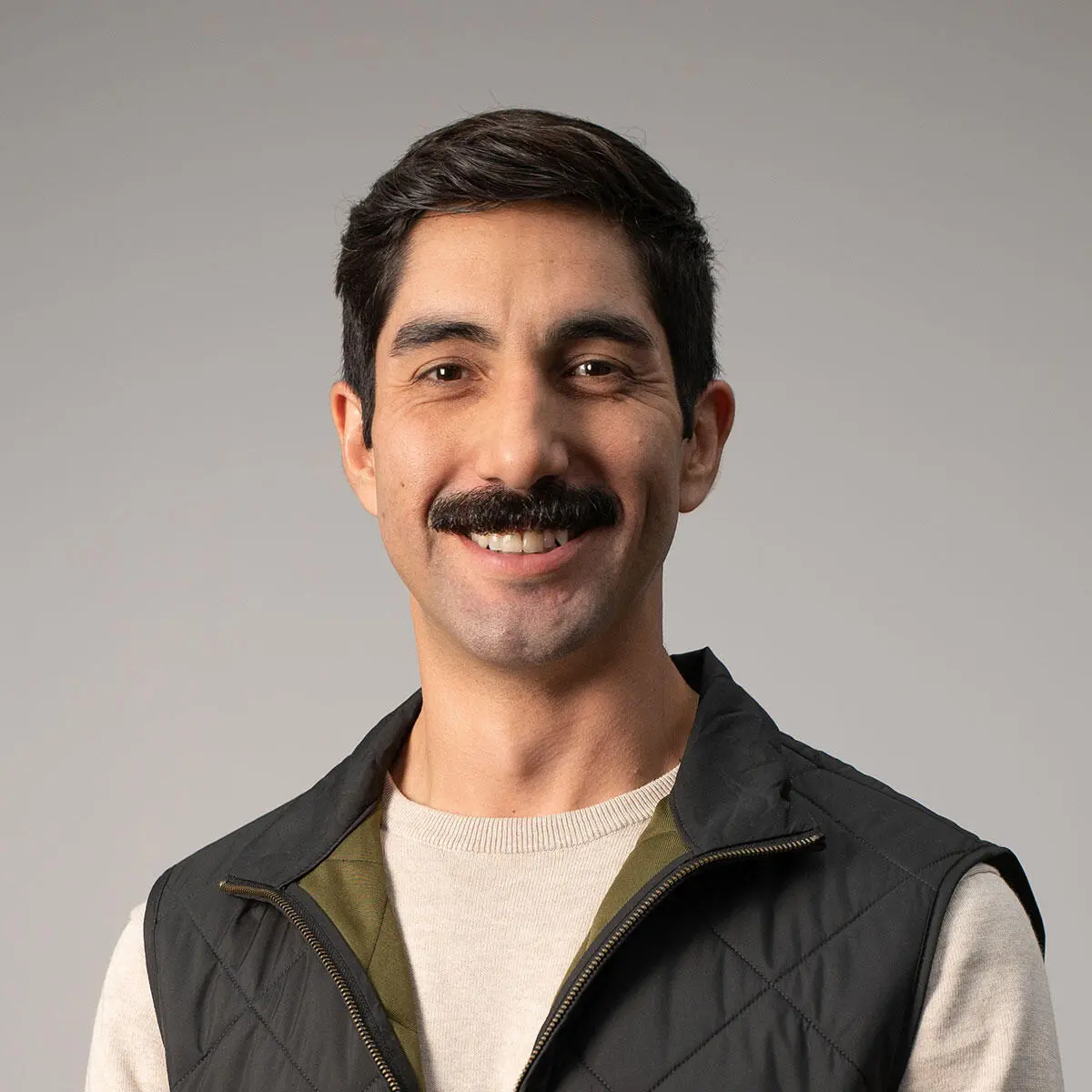
Eric
Position: Senior Quality Assurance Engineer
Years at the Company: 3
Department:
Quality Assurance, Semiconductor Components Group,
Kyocera International, Inc.
If you ask Eric about all of the experiences and environments he has lived through, you might think he has lived three lifetimes rather than one.
Adapting to challenges and seizing new opportunities has defined his journey to an engineering career. Stints in the military, work in a government office, and a jump-start into higher education all helped shape his character into what it is today.
Five years spent working on helicopters, along with time spent in leadership courses, gave Eric the confidence to pursue a career he once thought was impossible—setting the stage for his future in engineering.
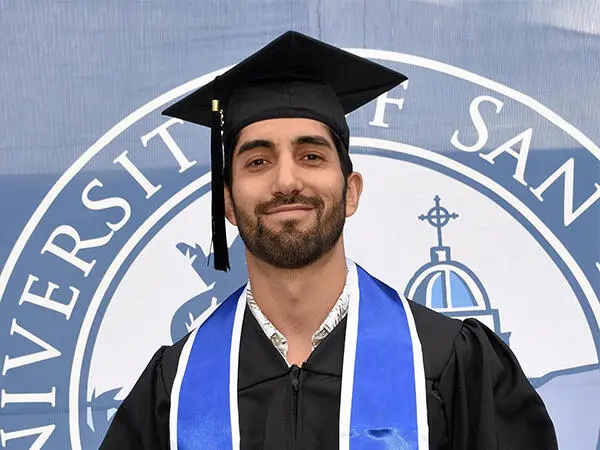
Encouraged by his uncle to turn his passions and ambition into reality, Eric leaned into his aptitudes for creativity and discerning fine details. After studying Industrial and Systems Engineering at the University of San Diego, he began his engineering career while completing his MBA, driving strategic quality initiatives with a positive and disciplined outlook.
INTERVIEW
INTRODUCTION
I didn’t always plan to become an engineer—my path was shaped by experience, hard work, and a willingness to adapt.
Growing up, I learned from my mom that progress comes step by step, and that mindset carried me from working after high school to serving in the military, where I gained discipline and confidence.
Over time, new challenges and encouragement from my uncle pushed me toward education and ultimately engineering. Each step, though unexpected, helped me grow into who I am today, someone who embraces change and turns it into opportunity.
FORMATIVE YEARS
I grew up with my mom, who showed me that hard work can take you places. I saw her get us from point zero to point five, so I thought, “Why can’t I go to point ten?”
After graduating high school, I had a job washing boats, and I was earning a good income for a teenager, but I knew it wasn’t going to lead anywhere. After talking to a recruiter about the benefits and education I could receive in a military career, I took the test and saw an opportunity to work on aircraft. I spent five years working on helicopters and was exposed to a wide mix of cultures, which broadened and enhanced my American perspective. I enjoyed the work, but I wanted to challenge myself more.
Once my interest in education was sparked, I started taking elective courses and learned that every challenge is worth it. After pushing through and graduating with honors, here we are today.
THE LIFE OF AN ENGINEER
My role is to create a quality-infused organization, and to do that we have to meet certain goals. One aspect I’ve been working on is building risk-mitigation systems that help us improve our overall quality. Another is empowering people on the production floor to raise their voices.
Creating ownership within our teams is not only about improving quality but also about building a better work environment. We have so many bright minds on our team, and I know that if we start seeing this place as our home, we can achieve anything we can imagine.
The skills I’ve learned as an engineer translate to real-world tasks every day. Even the way I make coffee in the morning has changed. I grind the beans to a very specific size for a certain filter and use water heated to a precise temperature. If you repeat the recipe with the same parameters, you get a perfect cup every time. That’s something I’ve learned that manufacturers strive to do as well.
ACHIEVEMENTS
・First in family to attain undergraduate and graduate degrees
・First in family to become an engineer
・Prior career in United States Marine Corps
・Plans to become a Certified Quality Engineer (CQE)
Q: What are some of the biggest challenges you face as an engineer, and how do you react to them?
A: “The biggest challenges are not always the technical ones; with time you learn how to overcome technical issues. What challenges me most are the social aspects, thinking about how people talk to each other, and how groups interact. I’m looking into how we can use an engineering approach to improve employee relations and team spirit.”
"To be a good engineer, you have to think outside the box, inside the box, and sometimes without a box."
FUTURE VISION
Leading by example can have a powerful impact on a team, especially as you move into higher positions. I believe our engineering mentality carries over into other parts of life as well—shaping our ethics, our morals, and the way we approach everyday problems.
I’ve even applied my engineering mindset to the task of renovating a house that was built in the 1960s. It helps me to make decisions about materials, assess risks, and understand the bigger picture.
I’m also looking to further my education. After completing my degree and my MBA, I’m now planning to become a Certified Quality Engineer (CQE).
"If you're not happy doing something, it's worthless. Try things. If you don’t like it, you’re young—you can change! The key is continuous learning. Don’t feel pressure to have everything figured out. Pressure is good in machines, not in our heads."
My path in life so far has been about constantly adapting—joining the military, sparking an interest in business, changing direction through my uncle’s advice, and going into engineering. I didn’t have anything figured out from the beginning, and adapting along the way got me to where I am today.
SHARE


Latest Articles
-

KYOCERA TEACHES
Semiconductor back-end manufacturing overview
-

TRENDING TECH
Why fusion reactors need advanced ceramics
-

KYOCERA TEACHES
Front-end semiconductor manufacturing explained
-

KYOCERA TEACHES
Introduction to Fine Ceramics
-

KYOCERA TV
Kyocera Teaches: How MEMS shape our world
-
KYOCERA TV
Kyocera Teaches: MEMS Actuation Methods