


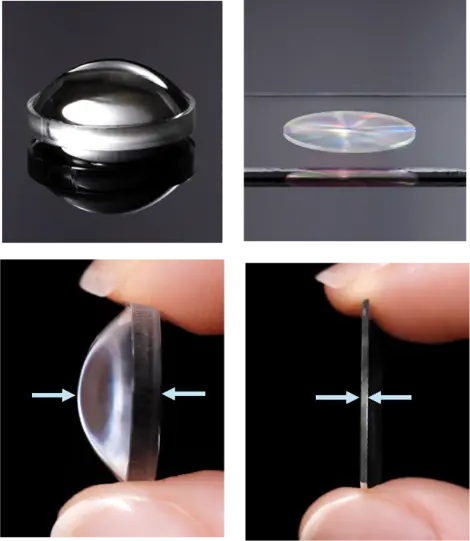
Conventional optical lenses typically require more than 1cm of thickness to do their job. A meta-lens does the same in less than 1mm. That single number is where engineers working on optical systems perk their ears.
What is a meta-lens?
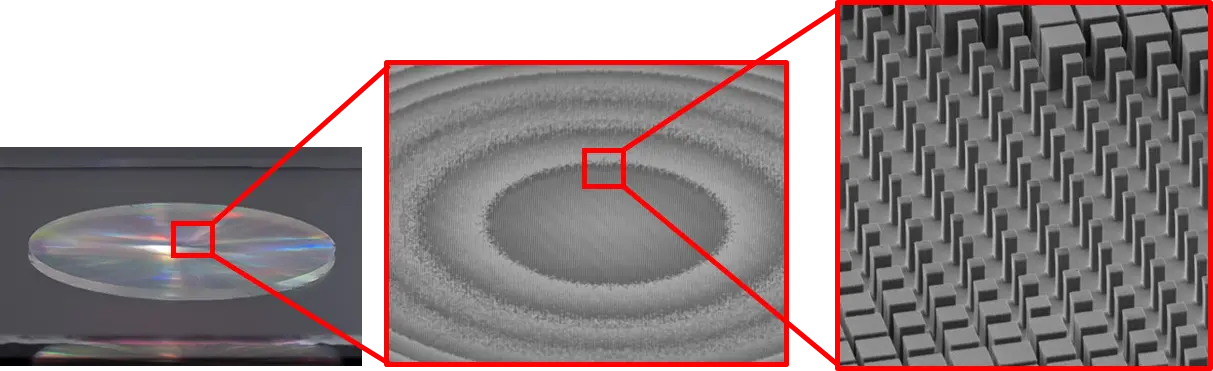
A meta-lens is an ultra-thin optical component incorporating a metasurface — a dense arrangement of pillar-shaped meta-atoms smaller than the wavelength of light — to control light propagation. Optical behavior is determined by the design of those structures rather than by the curvature of a conventional refractive lens.
One component, multiple optical functions
By precisely designing the meta-atoms, multiple optical functions — such as wavelength control and phase modulation — can be integrated into a single meta-lens. This significantly reduces the number of optical components traditionally required. As a result, both the optical system and the final device can be made dramatically smaller and lighter.
Focal position that shifts with color
The newest meta-atom design technologies can produce a meta-lens featuring a focal position that shifts depending on the color (wavelength) of light. Images of different colors can be formed at different heights — for example, green images appear farther from the viewer, while red images appear closer.
Generating images at varying depths is what produces the depth effect. The result is three-dimensional aerial visuals with rich depth cues, even within a wearable-sized optical module. Natural depth expression no longer needs bulky multi-layer optical assemblies.

From component to a wearable prototype
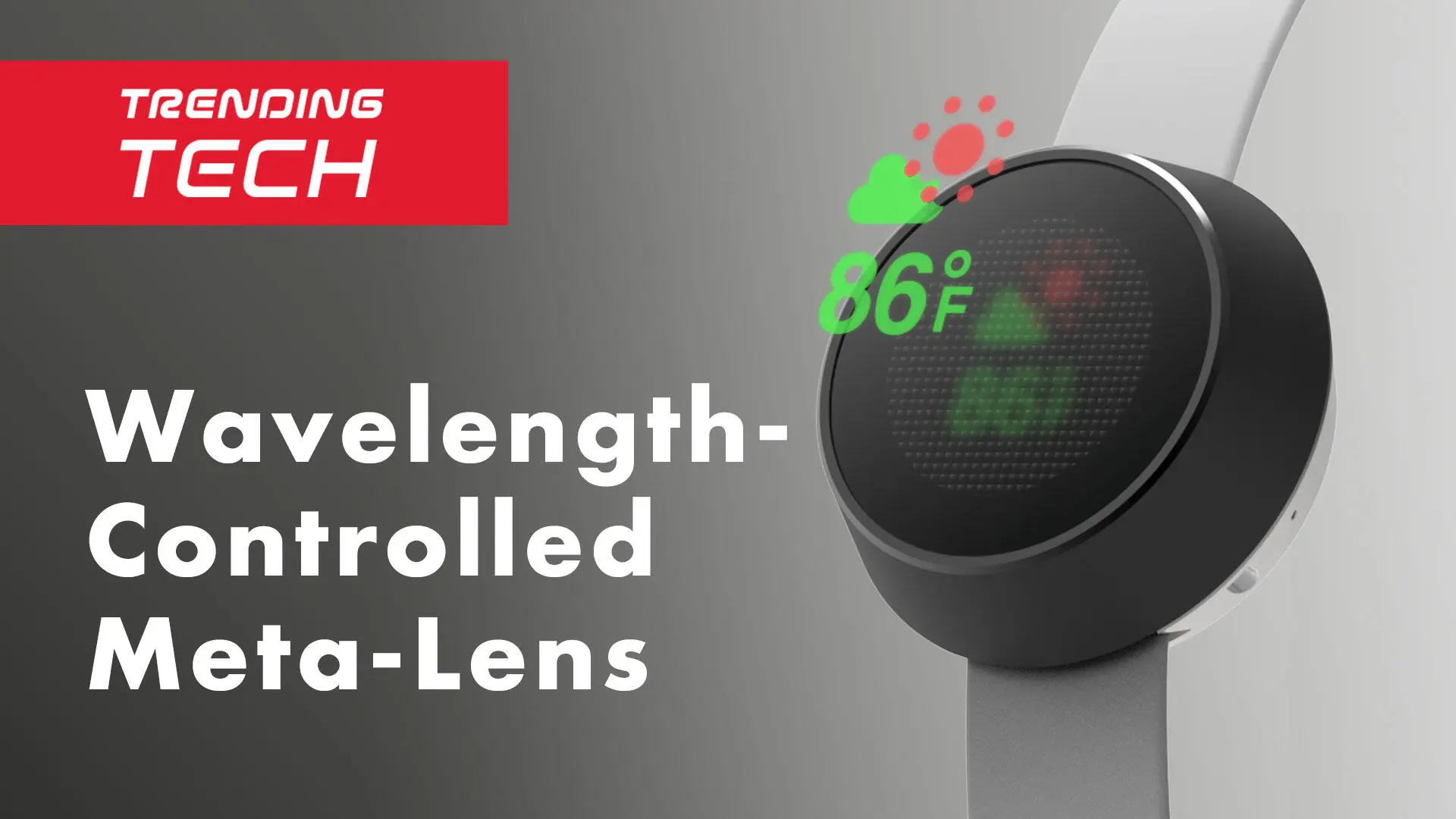
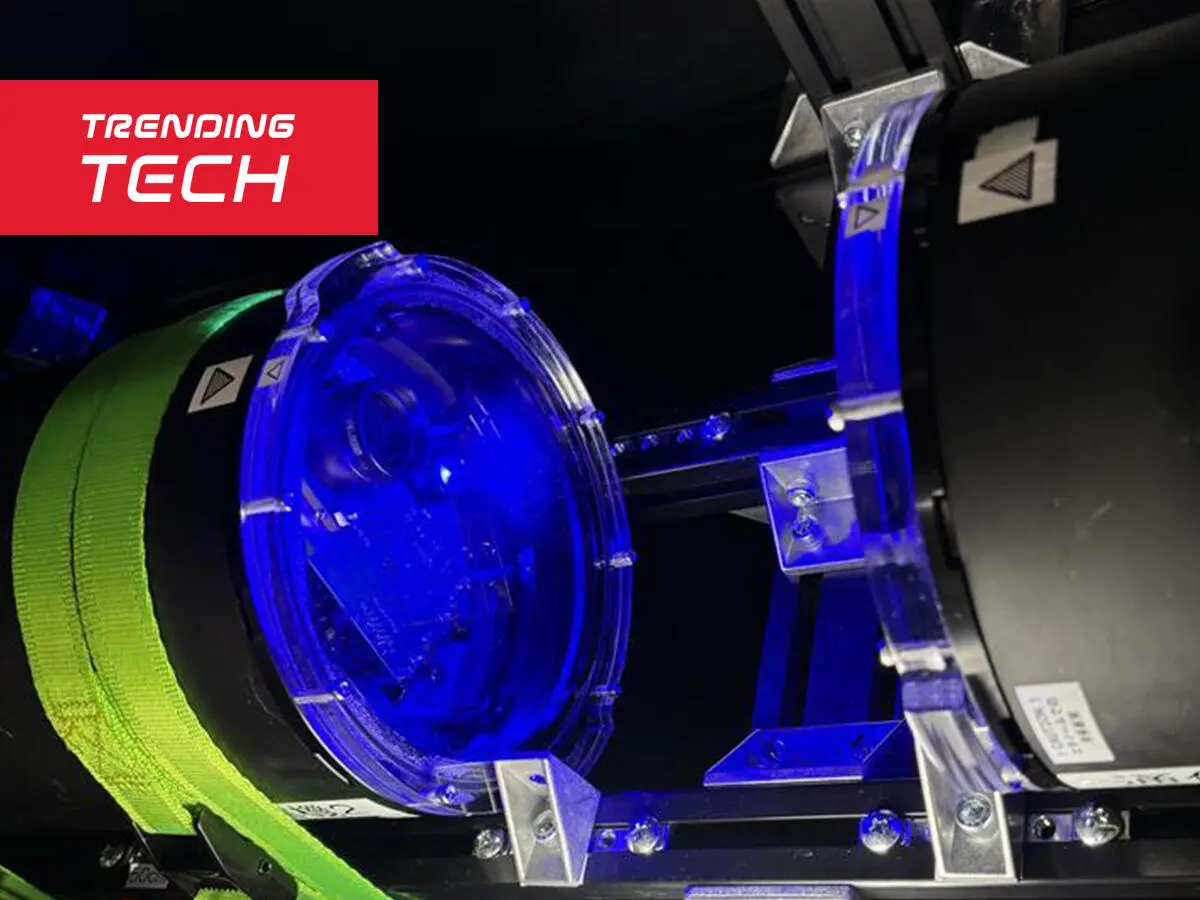
Combining meta-lens with existing aerial imaging technologies — cultivated through research into high-resolution aerial displays — makes it possible to build a compact, lightweight wearable display capable of projecting floating images with realistic depth. The prototype being developed by Kyocera is called the Wearable Aerial Display, a step toward next-generation visual interfaces that integrate high-quality optics into small, body-worn devices.
The next step for wavelength control
Currently, this technology enables aerial images whose focal positions vary by color. However, further increasing the degree of wavelength control could allow full-color, high-resolution aerial images. Furthermore, advances in meta-atom design may enable the projection of smooth 3D visuals into mid-air.
The potential is not limited to aerial displays. Because meta-lenses are thin and lightweight, they are highly suitable for applications such as:
・More miniaturized and wearable VR/AR glasses
・Slimmer, space-saving designs for cameras and projectors
・Other optical devices where compactness is essential
From consumer devices to industrial equipment, the possibilities for meta-lens designs extend across a wide range of fields — and it begins with a component that measures just fractions of a millimeter.
SHARE


Latest Articles
-
TRENDING TECH
Meta-Lenses Offer Natural Depth to Wearable Displays
-
TRENDING TECH
Transforming industries with triple-lens AI depth sensing
-

KYOCERA TEACHES
Semiconductor back-end manufacturing overview
-

TRENDING TECH
Why fusion reactors need advanced ceramics
-

KYOCERA TEACHES
Front-end semiconductor manufacturing explained
-

KYOCERA TEACHES
Introduction to Fine Ceramics