


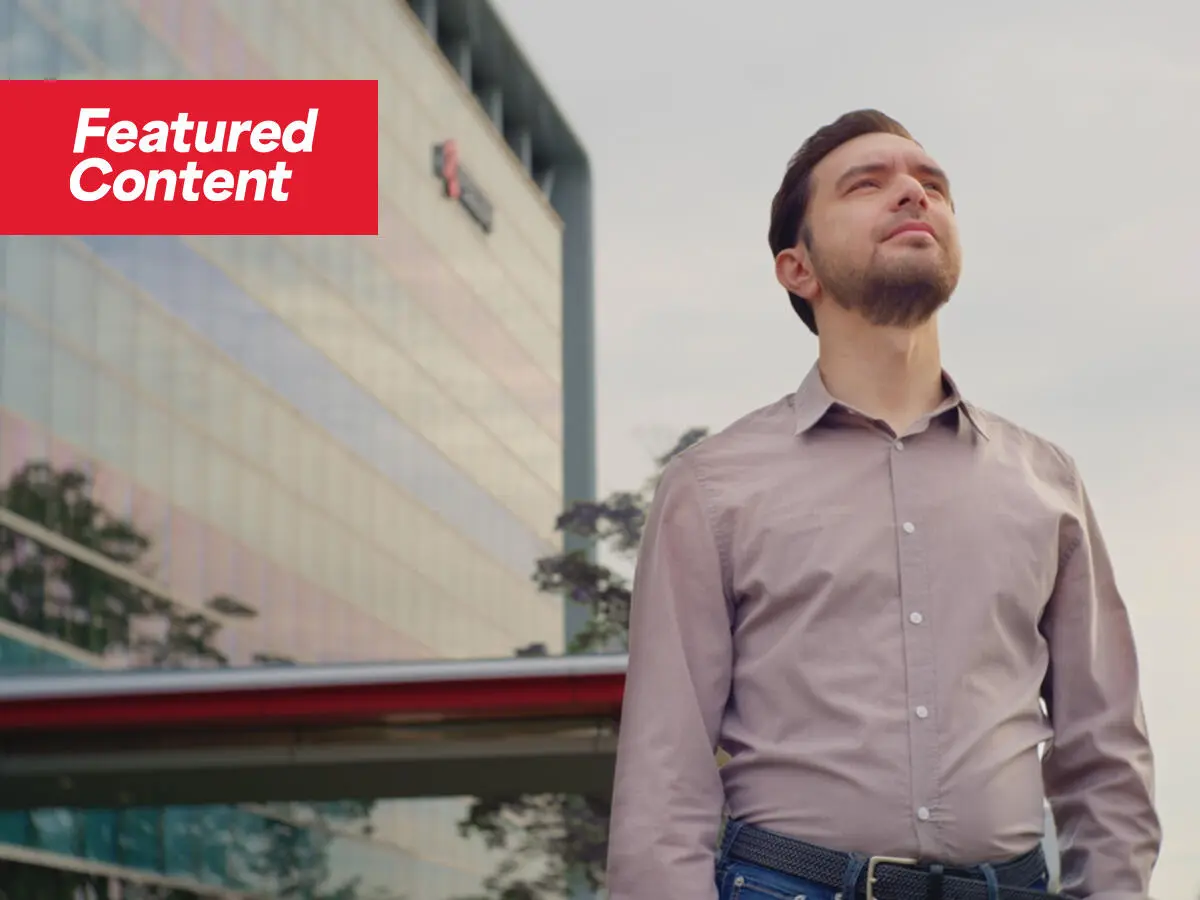
From a young age, Fabio Iesari knew his passion was science. However, while attending his STEM-focused secondary school in the seaside region of Marche, Italy, he faced a difficult question: which branch of science to pursue? Biology, physics, chemistry, or maybe computer science? An increasing number of students around the world are facing the same challenge.
The number of awarded science and engineering bachelor’s degrees increased by almost 30% in the US between 2012 and 2021, and with rapid innovations across sectors from AI to nanotechnology, once-niche careers are growing in demand and fueling a larger engineering job market. For Iesari, the answer arrived while he was at a conference for X-ray absorption fine structure (XAFS) at the University of Camerino, sparking a passion that led him to Japan for research and ultimately to his current role at Kyocera—a leading Japanese diversified technology company—in Kyoto.
Engineering at the atomic level
XAFS is the process of researching the atomic structure of materials by studying the way they absorb X-rays. By understanding materials at their smallest scale, scientists and engineers are able to develop materials for a range of applications across biology, environmental science, and material science.
In the medical field, XAFS is used to study metals naturally occurring in the body, as well as those used in manufacturing drugs, helping scientists improve both drug efficacy and bioavailability. For sustainable conservation, the technology can be deployed to protect ecosystems from environmental pollutants by using XAFS to identify the concentration and locate the source of unwanted contaminants.
At Kyocera, Iesari works in the R&D team studying materials with XAFS to develop smaller and more efficient Multilayer Ceramic Capacitors (MLCC). At just a fraction of an inch in size, MLCC are vital to products such as smartphones and EVs—helping them become smarter and faster—and even aerospace, where reliability is of the utmost importance.
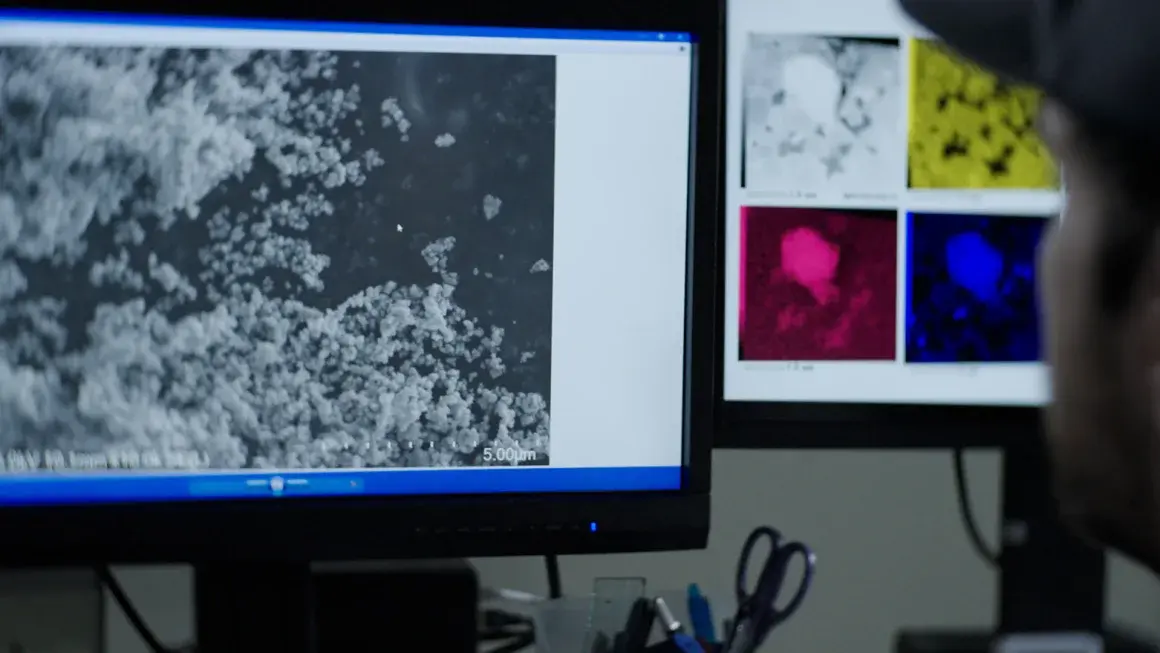
What attracted Iesari to XAFS wasn’t just its specialized nature but also its relevance across multiple industries and real-world challenges. “The good thing about specializing in this technique is that I can use it to investigate many kinds of materials, from ceramics to liquid metals, which have a wide range of applications,” he notes. Crystal structure analysis—which Iesari holds a Ph.D. in—has been vital in Kyocera’s MLCC innovations, including the development of a world-first high-capacity MLCC, roughly the size of a grain of sand, that could be used to enable generative AI-equipped smartphones.
Finding your niche
When it comes to choosing a niche, there are several factors that play on engineers’ minds. Research has found that motivations range across both intrinsic factors, such as problem-solving opportunities and the potential for positive global impact, and extrinsic factors, such as role models and career progression. This was especially true for Iesari, as both the people and research opportunities played critical roles in his career.
Iesari attributes his love of XAFS to Professor Andrea Di Cicco, who leads the physics division at the University of Camerino in Italy. “I did my bachelor’s, master’s, and Ph.D. with him. He’s one of the world’s experts on X-ray absorption spectroscopy.” And when Iesari received the Japan Society for the Promotion of Science (JSPS) scholarship, a highly competitive one-year research opportunity, he recalls that knowing a professor at the University of Toyama helped him acclimatize to the culture—an experience further supported by research, which found that access to social support improves job satisfaction and success.
Beyond those external factors, Iesari finds fulfillment in the far-reaching importance of XAFS on modern technology, despite most people not understanding the science or the impact of his work.
Technology has become more advanced thanks to the collective work of so many people. If I can contribute to that, I’m happy.
Fabio Iesari, Researcher, Department of Material Function Research, KYOCERA Corporation
Collaboration across disciplines
Kyocera’s founder Kazuo Inamori, who went on to become a Zen Buddhist priest in 1997, was very intentional in developing the company’s culture, believing that just as individuals have a character, so do companies. Founded in 1959 with a capital of 3 million yen—around $200,000 adjusting for inflation—the company had limited funds and no credentials. But thanks to the dedicated work of Kyocera’s original 28 employees, the company thrived and grew into the multinational innovator it is today.
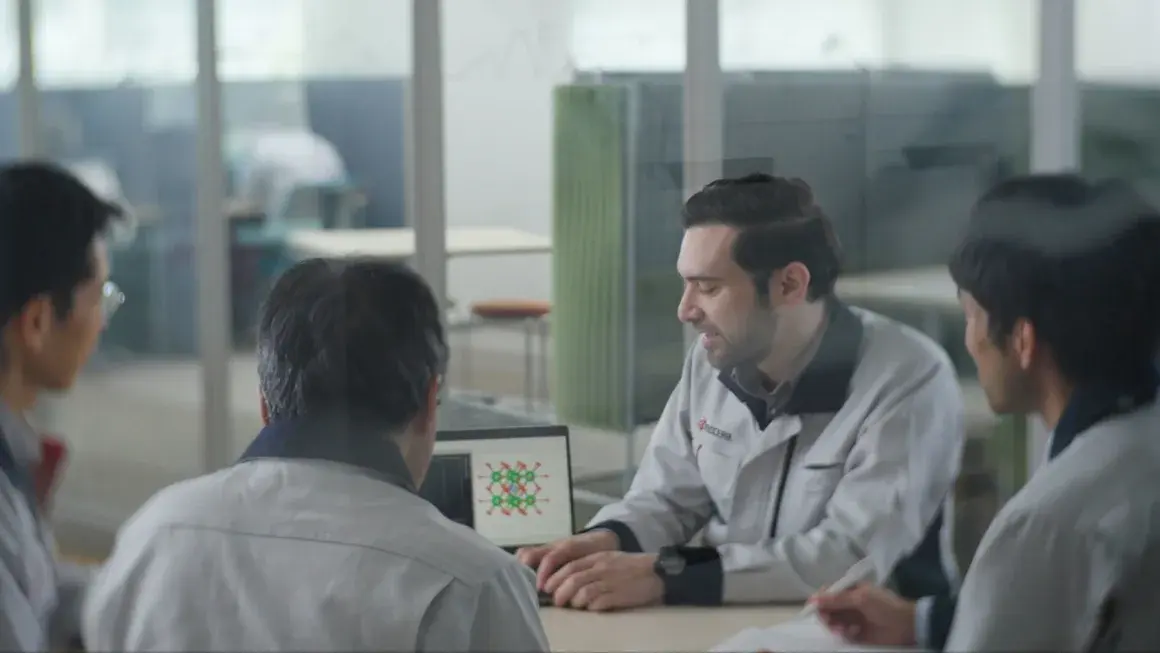
Inamori learned an important lesson from this experience, seeing that the best management came from trust and mutual respect for employees. This belief remains ever-present in Kyocera today and is now represented in its bottom-up management style, in which employees are given the space to come up with their own problem-solving approach. With his research background, Iesari finds this freedom particularly productive.
You’re free to work on what you want. It gives young engineers the ability to grow and come up with ideas in their own way.
Fabio Iesari, Researcher, Department of Material Function Research, KYOCERA Corporation
As a specialized engineer, Iesari finds further support in Kyocera’s monthly meetings, which bring together engineers from various expertise and projects to share advice and brainstorm through their diverse scientific perspectives. “If you’ve encountered a problem that month, you can discuss it and get help from others.” Through these interdisciplinary meetings—along with the company culture crafted by Inamori—Kyocera aims to create an environment where engineers can grow both personally and professionally.
For Iesari, what gives his work meaning is remembering the bigger picture. While XAFS involves studying what’s invisible to the eye, his work contributes to technologies people use every day. At Kyocera, by working as a team of specialized engineers—both within the company and with external partners—he is able to find that purpose, knowing his niche contributes to something larger than himself.

SHARE


Latest Articles
-

KYOCERA TEACHES
Semiconductor back-end manufacturing overview
-

TRENDING TECH
Why fusion reactors need advanced ceramics
-

KYOCERA TEACHES
Front-end semiconductor manufacturing explained
-

KYOCERA TEACHES
Introduction to Fine Ceramics
-

KYOCERA TV
Kyocera Teaches: How MEMS shape our world
-
KYOCERA TV
Kyocera Teaches: MEMS Actuation Methods