Case Studies
Case Study(1960s)
Development of Substrates
for IBM’s
Integrated Circuits
The spirit of challenge and creativity in all employees builds a world-class quality product
Faith and effort drove technological progress
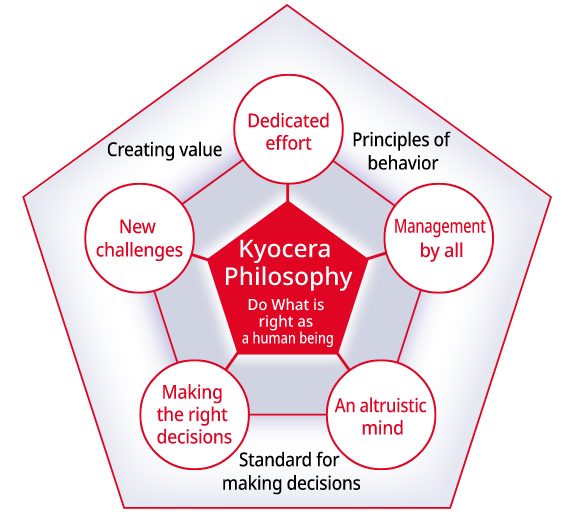
Early in Kyocera’s history, a massive order was received from IBM, the global computer manufacturer. The order was of a scale and difficulty that Kyocera had never previously undertaken, and became a project on which the then-young company would stake its future. Technical barriers, micron-level specifications, and a tight deadline. Rather than state-of-the-art equipment, the key that would enable Kyocera to overcome these challenges was the unique Kyocera Philosophy shared by all employees.
Challenges that seemed
impossible also offered great opportunities
- #New Challenges
In 1966, Kyocera was offered a tremendous opportunity to undertake a formidable challenge. It was an order for integrated circuit substrates to be used in IBM’s strategic mainframe computer product, the System/360. The massive order amounted to 25 million units, with a value equivalent to one quarter of Kyocera’s total annual sales. Although Kyocera had won the contract by beating out German companies such as Rosenthal and Degussa, Europe’s top ceramic manufacturers, the specifications were incredibly demanding, and Kyocera did not even have the inspection equipment at the time needed to evaluate the quality. But rather than giving up and saying, “We can’t do it because we don’t have the equipment,” Kyocera undertook the seemingly impossible challenge of developing the product ordered. Everyone in the company put their heads together to consider how it could be done. It was not a question of whether it would be possible with existing capabilities; it was a new challenge that needed to be achieved no matter what, marking the first step in a path that would significantly change Kyocera’s history.
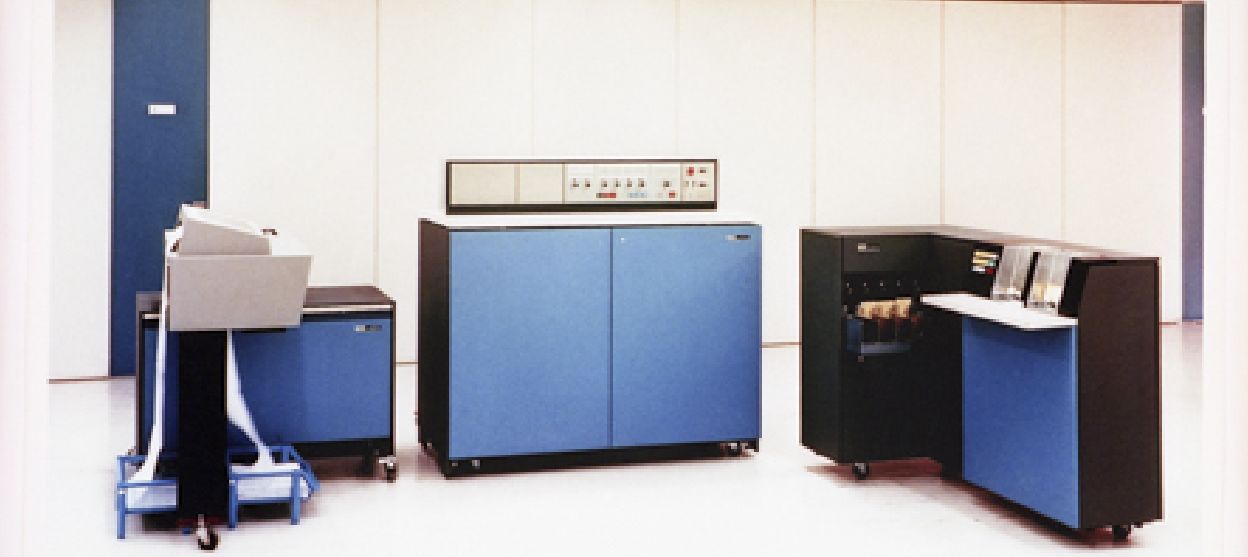
IBM’s System/360 general-purpose mainframe computer
Difficulties tackled head-on
- #Making the Right Decisions
Development encountered one difficulty after another. Kazuo Inamori, the company’s president at the time, took the lead, and the entire company worked together, only to have the first sample rejected due to a yellowish tint. But rather than protest that the color presented no problem in terms of performance, Kyocera resolved to remix the raw materials to produce the white base material that IBM required. This attitude of tackling the difficulties head-on strengthened the company’s technical capabilities and led to widespread trust in the high quality of Kyocera products.
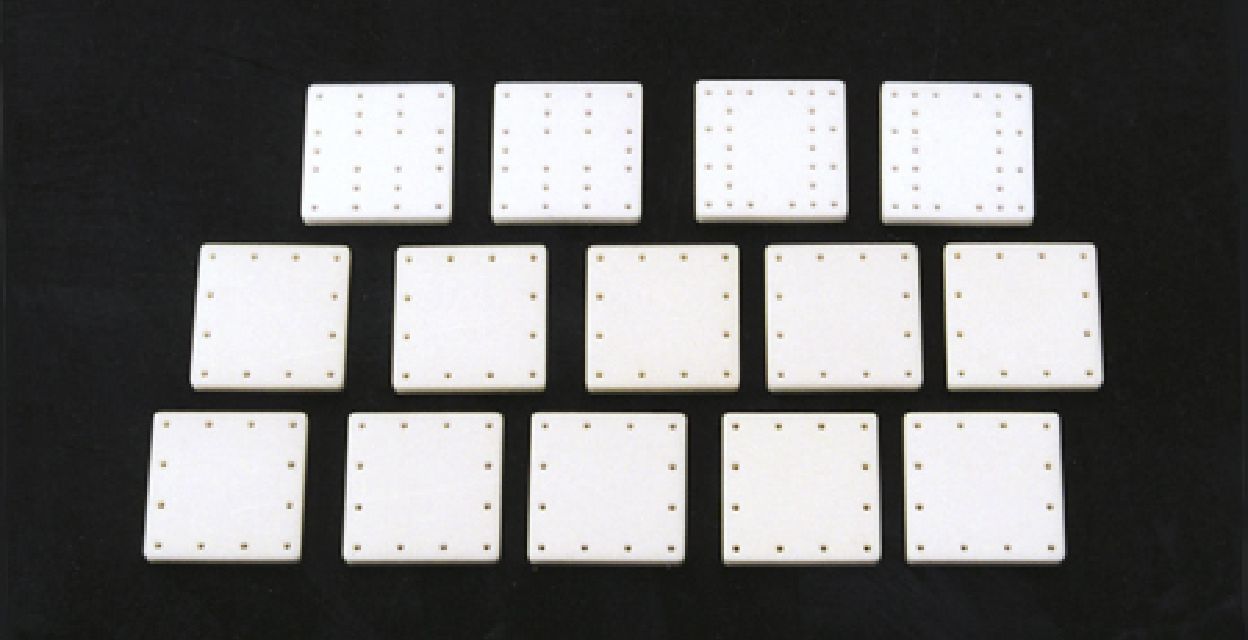
Substrates for the System/360
“Have you tried praying” – what lies beyond the limits of human capabilities
- #Dedicated Effort
Even after finally reaching the mass production stage, there were new difficulties to overcome. Using a huge electric furnace to fire a large number of products at the same time led to variations in the dimensions of the finished products. The person in charge worked tirelessly day and night, adjusting the conditions, but found it impossible to produce a consistently satisfactory product. One night, as the manager stood by the furnace weeping, Inamori asked, “Have you tried praying?” In other words, Inamori was asking whether, as an engineer, as a human being, had the manager tried every conceivable solution, exerting themselves to the point of exhaustion? Had they poured their heart and soul into the product, taking it to a level beyond the limits of human capabilities? Only through the ultimate cumulation of “Dedicated Effort” does the clue to solving a problem reveal itself. Inspired by Inamori’s words, the manager applied himself with even greater determination, finally overcoming the challenge and succeeding in mass production.
The actions of one part-time employee proved
the strength of the bonds within the company
- #Management by All
The IBM substrate project mobilized the strengths of many Kyocera employees, not just engineers. An anecdote illustrates this. On a day when heavy snowfall in Shiga Prefecture had paralyzed transportation and threatened the factory’s operations, a part-time employee walked for two and a half hours through the snow to get to work. “It would be terrible if even one press stopped because I was absent,” she said. What motivated her was a spontaneous sense of responsibility. She and others like her were working for the customer, for the company, and for their colleagues. Every Kyocera employee thought and acted as a participant in management. It was this spirit of “Management by All” that permeated every corner of the workplace and enabled Kyocera to accomplish this seemingly impossible challenge.
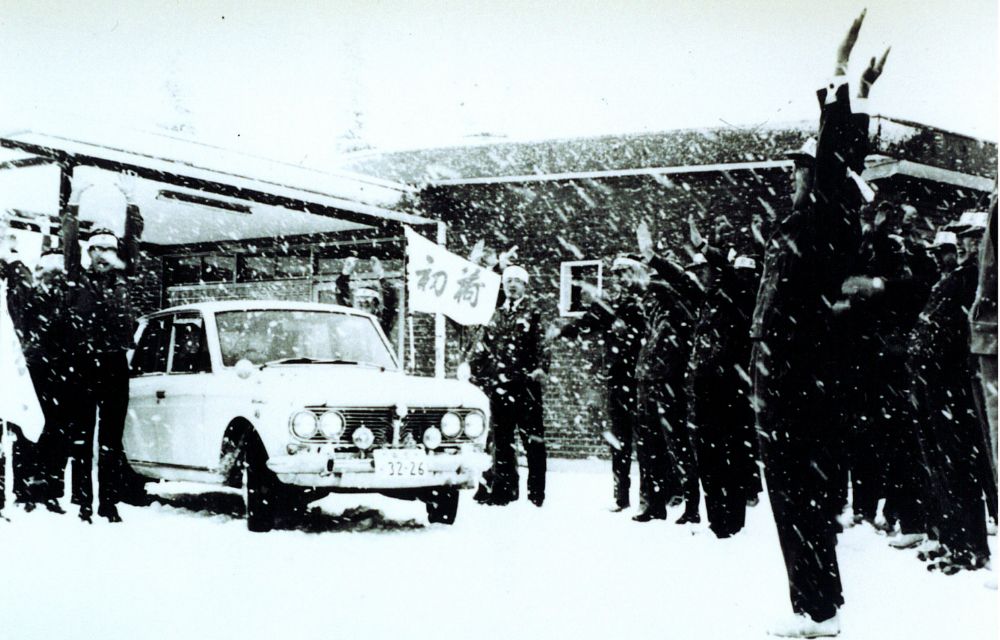
Celebrating at the Shiga plant
The unwavering Philosophy behind technological prowess
- #New Challenges
Meeting IBM’s demands meant much more than mere success in business. By successfully meeting the world’s most stringent requirements, Kyocera’s technological prowess, production capacity, and quality control all made a dramatic leap forward. This success became widely known in the market, so that one after another, Kyocera products became the choice of both top-tier foreign companies and major domestic electronics manufacturers. Yet the true achievement was that this experience demonstrated at home in Japan and abroad the power of the Kyocera Philosophy. With the right mindset, unity of spirit, and unparalleled efforts, any obstacle can be overcome. Passed down through the generations, this experience has become part of Kyocera’s DNA, so that even today, we never give up and push past the limits in every challenge we take on.


