Case Studies
Case Study(1980s)
Next-Generation ECOSYS Laser Printer Series
The challenge to develop a next-generation printer with outstanding environmental performance and cost efficiency
Overcoming setbacks to turn environmental commitment into a reality
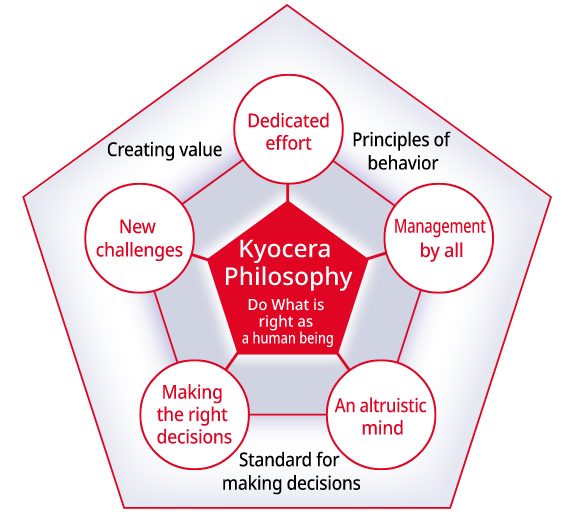
Pivoting from a struggling copier business, Kyocera entered the laser printer market in the 1980s. Despite a much smaller workforce than its competitors, it challenged the status quo and took on the challenge of greatly extending printer life. Behind the drive to overcome unprecedented technical barriers was a firm commitment to struggling colleagues and a vision for the future of the global environment. The development team was guided by the Kyocera Philosophy, pursuing what is universally right by asking, “What is the right thing to do as a human being?”
“For our colleagues” – a powerful motivation forged from adversity
- #An Altruistic Mind
In 1986, Kyocera made a difficult decision. Facing a situation where there was nothing left to produce at its main factory, the company chose to withdraw from its copier business and focus on entering the laser printer market, where demand was on the rise. The development team was only about one-tenth the size of its competitors, but was driven by feelings of frustration and regret that the copier business could not support the livelihoods of their colleagues on the factory floor. The team’s strong sense of responsibility as engineers, combined with their natural desire to help out their colleagues, became a powerful source of motivation to create a product that would transform the industry. It pushed them to engage in discussions late into the night, day after day, while working tirelessly to bring a product to market as quickly as possible.
Breaking through technical barriers
with tenacity and determination
- #Do What is Right as a Human Being
To differentiate itself from its competitors, Kyocera focused on incorporating an amorphous silicon (a-Si) photoreceptor drum with more than 30 times the durability of conventional drums. This required extending the life of other parts and mechanisms as well. The most difficult challenge was developing a method to clean microscopic debris from the hard surface of the a-Si drum. With limited human resources, the development team had to approach the problem from various angles, including developing new toners and polishing rollers through extensive trial and error. The tedious effort was like clearing through deep wilderness with only hand tools, yet they pressed forward. With a competitive spirit and quiet dedication, they never abandoned the quest, ultimately overcoming every difficulty.
Balancing ecology and economy to pursue what is universally right
- #Making the Right Decisions
Kyocera introduced the world’s first laser printer equipped with an a-Si photoreceptor drum in 1992. Branded as “ECOSYS,” this groundbreaking product achieved both ecology (eco-friendliness)—significantly reducing waste—and economy (economic efficiency)—greatly lowering running costs. At a time when the industry’s primary focus was on the initial purchase price, Kyocera had the foresight to instead pursue reductions in total cost of ownership, including operating costs, while also minimizing environmental impact. Guided by the ethical principle of asking, “What is the universally right thing to do as a human being?” the company brought to market something of genuine value to society. In the end, ECOSYS earned numerous environmental certifications worldwide and was received with widespread acclaim.
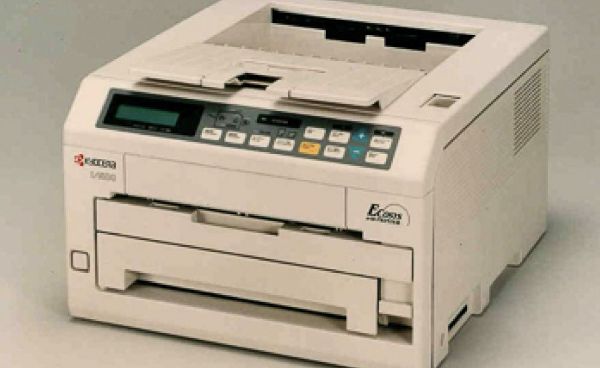
The ECOSYS LS-1500 printer, equipped with an amorphous silicon a-Si photoreceptor drum
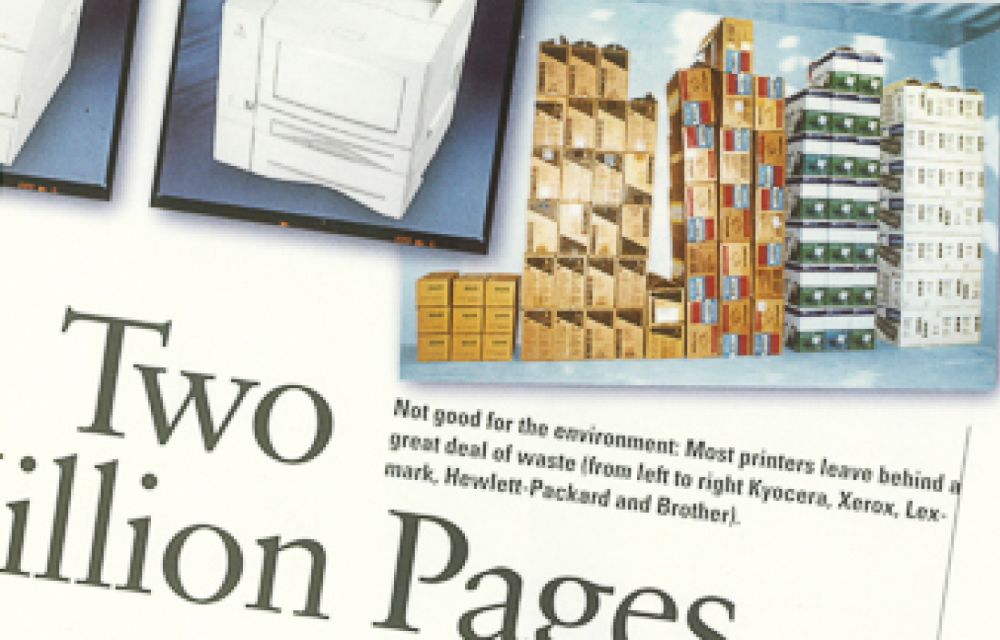
Comparison of waste generated after printing two million pages using top printers, as reported by Germany’s PC PROFESSIONAL magazine (Kyocera had the lowest waste volume, as shown on the left of the photo above)
Carrying forward the ECOSYS concept and technology to tackle the next environmental challenge
- #New Challenges
Nearly 30 years after the development of ECOSYS, Kyocera’s concept of environmentally responsible printing and related technologies continue to be carried forward toward new challenges. One such advancement is our expansion into industrial printing on non-paper materials with the “FOREARTH” inkjet printer brand for textiles. In the apparel industry, high water consumption in the printing process and waste from overproduction have become serious environmental issues. Leveraging proprietary ink technologies, Kyocera has succeeded in bringing water usage for textile printing down to nearly zero. The company’s commitment to the environment and proven technological capabilities, as first demonstrated with ECOSYS, today continue to transcend industry borders and emerge in new forms of expression and value creation.
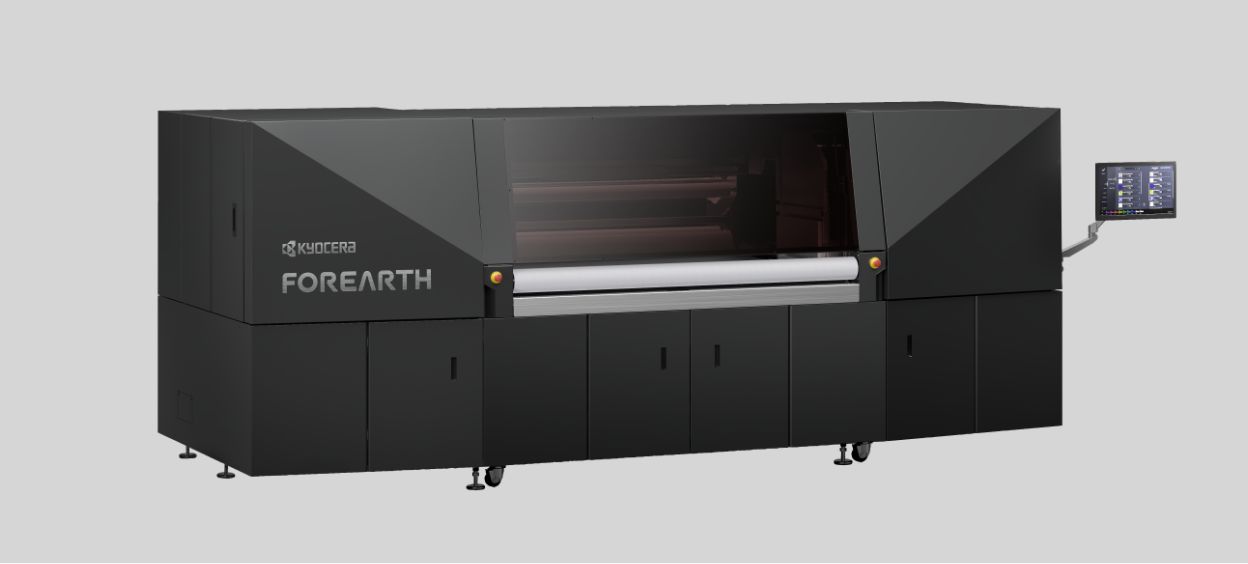
Kyocera’s inkjet textile printer brand “FOREARTH” for printing on fabrics

Water-based pigment inks and pre- and post-treatment solutions developed in-house enable printing on a wide range of fabrics—including cotton, silk, polyester, nylon, and blends—without the need to change inks.


