Case Studies
Case Study(1970s–1980s)
Development of an All-Ceramic
Engine
Tackling ongoing challenges powered by faith in the unlimited potential of new materials
Tenacity and the spirit to pioneer into uncharted territory
In the 1970s, Kyocera formulated a plan to use the ceramic manufacturing technologies it had developed for semiconductor packaging to develop industrial machinery parts, starting with automotive parts. The company set its sights on achieving something considered impossible: an all-ceramic automobile engine. A breakthrough was needed to overcome the technical hurdle of ceramics cracking in extreme environments. That breakthrough was achieved thanks to a belief in pioneering uncharted territory and the whole company uniting to take on a bold challenge.
The courage to tackle what people said was impossible
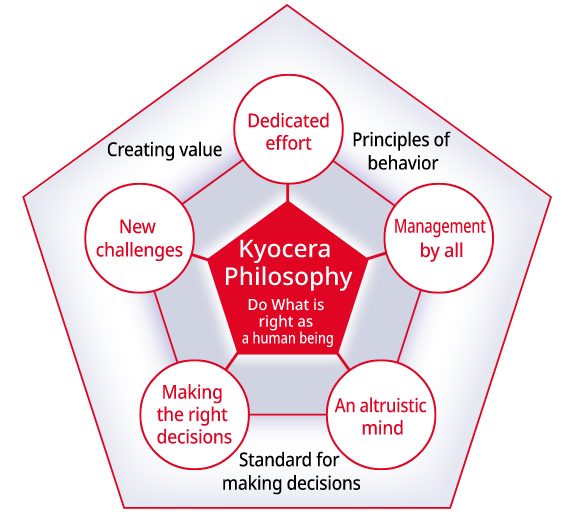
- #New Challenges
When Kyocera learned that an American engine manufacturer was developing a ceramic engine that required no cooling system, the company embarked on its own ambitious journey. Kyocera decided to try solving the drawbacks of conventional ceramics by addressing the dual challenges of developing new materials and assuring reliability, aiming to stimulate progress in the ceramics industry. Common sense at the time said that replacing a metal engine with a ceramic one was foolhardy, but Kyocera pressed forward, motivated by courage and the spirit to do whatever people said was impossible. The new challenge began there—to pioneer uncharted territory with a powerful determination to shape the future.
Perfecting technologies for the good of society and answering the needs of the times
- #Making the Right Decisions
Work on developing a ceramic engine began shortly after the 1973–1974 oil crisis, a time when the Japanese government had just launched its long-term Moonlight Project aimed at developing energy conservation technologies. Kyocera’s development objective—to reduce energy loss associated with engine cooling and improve fuel efficiency by incorporating ceramic parts into diesel engines—was aligned squarely with the direction the government was taking and reflected the needs of the times. The project went beyond technological innovation alone. It had a clear social mission: to deliver a highly efficient, energy-saving product for the greater good of the world.
Grueling trial and error, and the battle with cracking ceramics
- #Dedicated Effort
Replacing metal materials with ceramic ones within a short time frame while achieving the same degree of performance and reliability as the long-established metal engine proved extraordinarily difficult. When subjected to severe thermal shock at high temperatures and the stresses of high-speed rotation, the ceramic components cracked time and again. But Kyocera’s engineers pressed on. Performance and durability tests were repeatedly conducted, and every available approach was employed, including thermal and stress analyses using the finite element method; high-strength, high-toughness materials; and design improvements that incorporated stress-relief features. Knowing that great accomplishments never come easily, they steadily continued their efforts, moving forward one small step at a time in the belief they would succeed. As a result of that repeated trial and error, Kyocera’s engineers found themselves closer to an engine that met their expectations.
Aligning mental vectors to complete the project in just three months
- #Management by All
Just then, NHK (the Japan Broadcasting Corporation) approached Kyocera with an offer to do a report on “the world’s first ceramic-engine car.” Seizing this opportunity, under the leadership of Kazuo Inamori (the company’s president at the time), Kyocera set out to develop a three-cylinder, all-ceramic engine with no cooling system and key components such as cylinders and pistons made from silicon nitride. The engine was completed in just three months. NHK’s broadcast, showing an Isuzu Gemini driving along the Sakurajima Lava Road powered by the ceramic engine, sparked a huge response across Japan. This achievement, realized with astonishing speed, was made possible by all the parties involved aligning their mental vectors and working single-mindedly toward a shared goal.
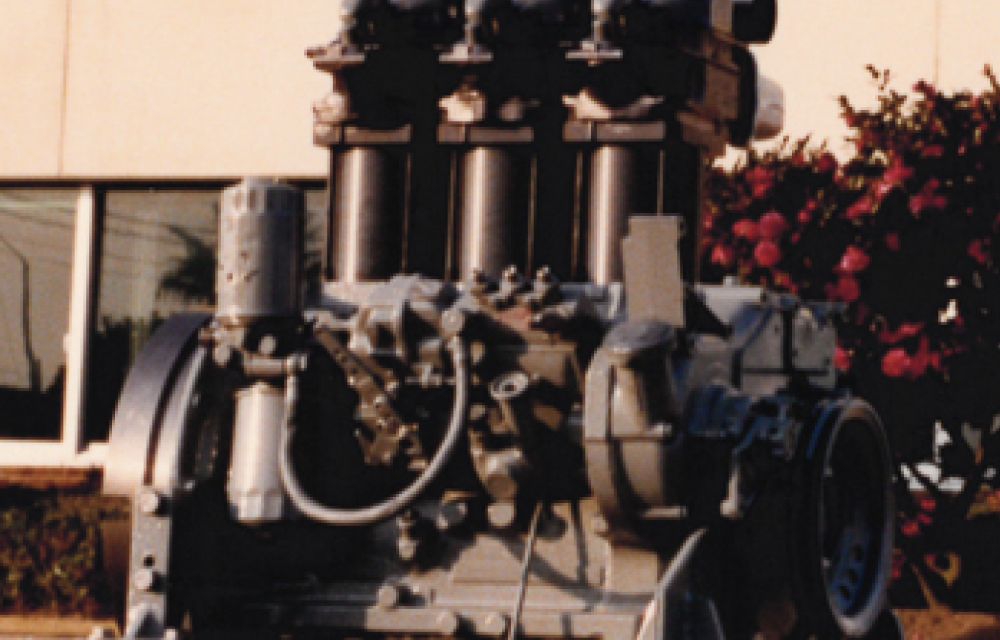
Kyocera’s three-cylinder, uncooled, all-ceramic engine installed in an Isuzu Gemini
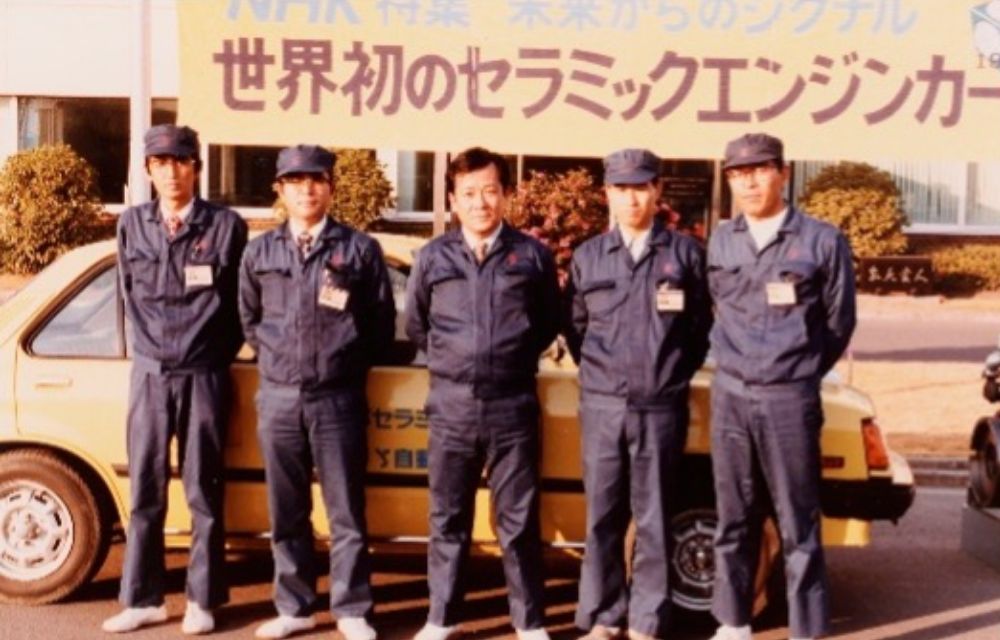
The ceramic engine development team featured on NHK
Overcoming barriers to commercialization and passing on a pioneering spirit to future generations
- #New Challenges
In the end, all-ceramic engines never became practical to mass-produce due to cost and reliability factors, but several of the capabilities honed through this development effort—such as silicon nitride materials technology, forming processes, and reliability assurance—are today utilized in Kyocera’s automotive and fine ceramics businesses. Also, the company honed its unique spirit to forge its own way forward, choosing to do what others cannot and to go where others dare not. In sailing a vast, uncharted ocean, hardships and difficulties are sure to be encountered, but the experience and technical capabilities gained become the foundation for new value creation. This pioneering spirit of being willing to push the limits of what is possible and never turning back continues to live on throughout the Kyocera Group today.
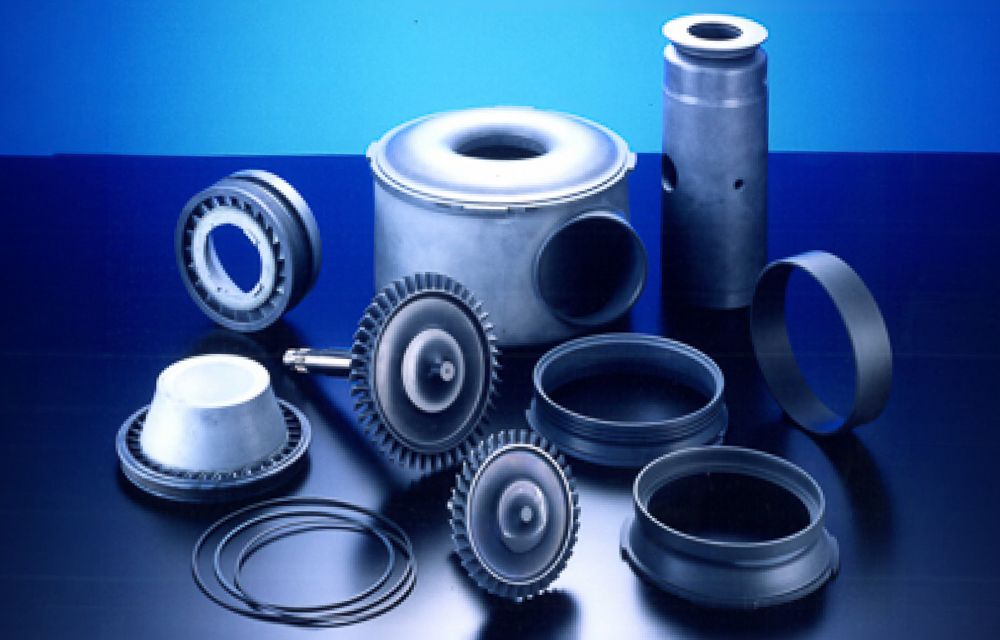
Components for gas turbine engines, developed in the wake of the ceramic engine project


