Case Studies
Case Study(1980s)
World’s First Mass Production of
Amorphous Silicon Photoreceptor Drums
Culmination of wholehearted effort brings a core component for environmentally friendly printers into reality
Despite a late market entry, a major breakthrough was made possible by zero-based ingenuity
In the late 1970s, the application of amorphous silicon for electrophotographic photosensitive materials using a plasma CVD (chemical vapor deposition) process was attracting worldwide attention. Kyocera was a latecomer in this field, not starting serious development until 1980, after several other companies had already entered the market. But by establishing an organization unconstrained by preconceived concepts and tirelessly working to develop new technology on the factory floor, Kyocera was the first in the world to achieve mass production in this uncharted technological field, enabling the company to subsequently garner the largest share of the global market for amorphous silicon photoreceptor drums.
“New wine in new wineskins” – a pioneering team mainly comprised of new employees
- #New Challenges
Since Kyocera had no staff with expertise in developing amorphous silicon photoreceptor drums, Kazuo Inamori (the company’s president at the time) thought, “If that’s our situation, then a team comprised mainly of new employees should be able to do it if they work hard at it. Let’s put new wine in new wineskins!” Of the eight staff assigned to the development team, five were new employees who had just joined the company right out of university. At a time when CVD equipment for depositing silicon onto cylindrical substrates didn’t even exist, this was a daunting challenge to start from scratch, beginning with the development of the necessary equipment.
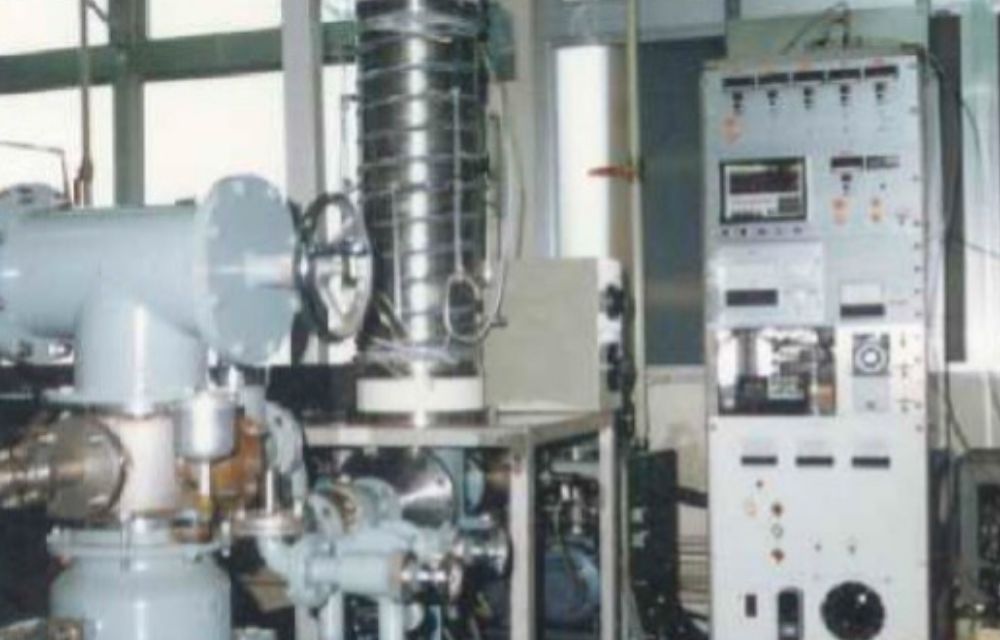
Early deposition equipment fabricated in-house for photoreceptor drums
First, perfectly reproduce “one good product.” Then, pursue meticulous condition control
- #Dedicated Effort
In establishing the mass production process, the task of the team was to first produce one satisfactory product and then improve reproducibility. Inamori instructed them to “Try to carry out production under exactly the same conditions as when you first produced a satisfactory product. For example, what were you feeling when you left home the morning of the day you produced the satisfactory one? You can’t produce the same product with good reproducibility unless both the physical conditions and psychological conditions are the same.” In this project, development was like feeling their way through a pitch-dark room, with no know-how or reference materials, and reproducibility gradually improved only through repeated trial and error.
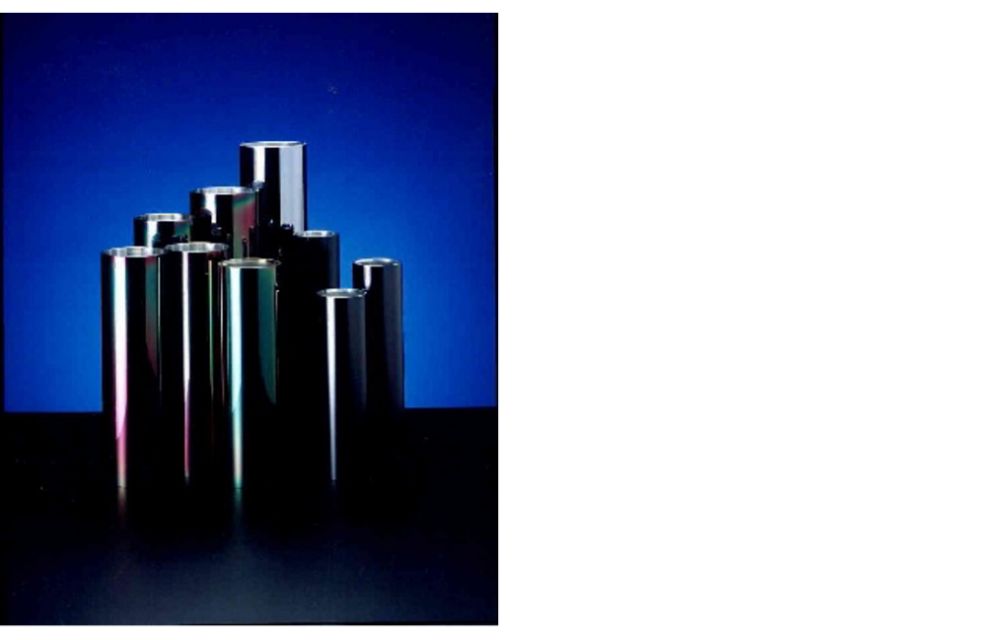
Amorphous silicon photoreceptor drums
“Cleaning is technology” – true engineering technology is born of experience
- #Making the Right Decisions
The biggest obstacle to mass production was how to eliminate minute particles of foreign matter. Removing this foreign matter during the manufacturing process was the key to determining the performance and quality of the product. Day after day, the team cleaned the aluminum tubes over and over again, gradually coming to understand the best materials and methods to use for cleaning the metal surfaces so that they were completely free of foreign matter. One frustrated young engineer complained, “All we do is clean every day. This isn’t technology.” But on hearing that, President Inamori declared, "Cleaning is technology. Just studying theory doesn’t make you an engineer. Experience is a crucial element, and that’s what true engineering technology is.” He held the team supervisor and others in charge responsible for failing to make the young engineer understand the importance of the task, and explained how to nurture and cultivate true engineers. By understanding the true essence of technology, then cleaning technology expertise and experience could be put to optimum use as engineering technology, leading to a strong technological foundation that enabled the production of products of consistent quality.
Overcoming obstacles to mass-produce a core component for eco-friendly printers
- #New Challenges
As a result of the team’s tireless improvements in a race against time, in April 1984, Kyocera succeeded in becoming the first in the world to mass-produce amorphous silicon photoreceptor drums. These drums were adopted by major copier manufacturers, enabling Kyocera to later become the world’s largest manufacturer of amorphous silicon photoreceptor drums, with an annual production of 350,000 units. Furthermore, capitalizing on the amorphous silicon drum's key characteristics of a long life with a hard surface less prone to scratching than a conventional drum made of organic material, Kyocera employed the amorphous silicon drum as the core component of the company’s own “ECOSYS” printer series. This defied the conventional wisdom of the time, dramatically reducing the frequency of replacement for printer parts and supplying the market with a product that simultaneously offered both eco-friendliness and economic efficiency. The technology developed for this project laid the foundation for what makes Kyocera’s Document Solutions business unique today.


