Social Activities
Civic Activities
Kyoto Daiwa Children's Home
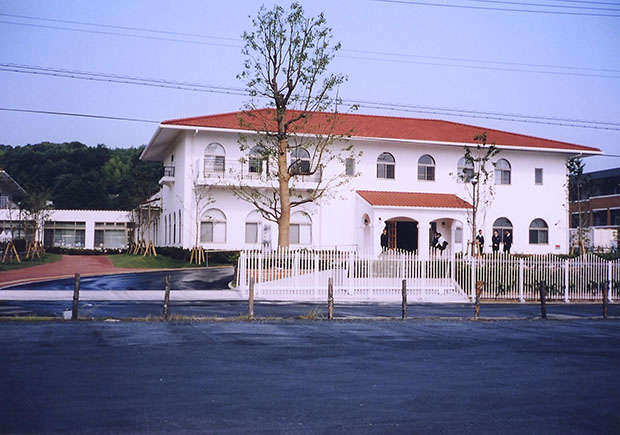
In 2004, Inamori established the Kyoto Daiwa Children's Home in Seika-cho in southern Kyoto Prefecture. The home is for infants and children who are forced to live apart from their families because of child abuse, neglect, or other reasons.
The facility, designed with bright images of Southern Europe, accommodates up to 60 children (ages 3-18) and 20 infants (ages 0-3). The buildings are divided into 6 units with 10 children each living as a family unit.
A Kumon-style(1) tutoring program is provided to elementary and junior high school children five days a week to further assist their studies. The home provides full support to children so that they become self-reliant and can return to their families. The facility is equipped with a support room where parent-child relationship improvement can be taught, as well as a psychotherapy room to ensure the good mental health of the children.
The Inamori Social Welfare Foundation also provides funding to assist young adults who leave the children's home in becoming independent by finding employment or pursuing higher education.
(1) Kumon is a private after-school program that helps students master fundamental skills in reading and math.
Japan-U.S. 21st Century Committee
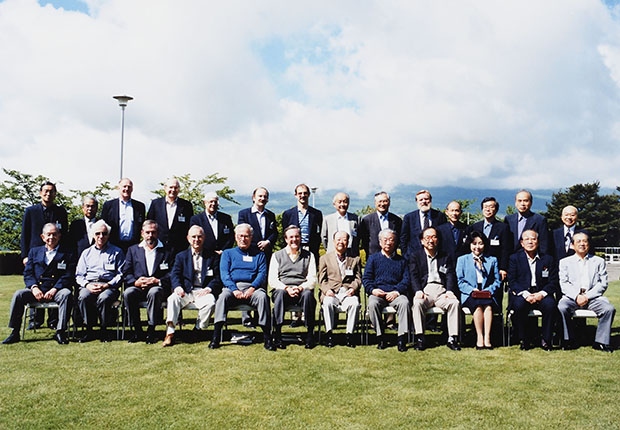
It has been said that the relationship between Japan and the United States is the most important bilateral relationship in the world; both countries share the values of democracy and liberty, and have been interdependent in many respects since the end of World War II. The Japan-U.S. 21st Century Committee was established to discuss the current and future relationship between Japan and the United States from a civilian perspective.
This committee consisted of leaders from both countries. From Japan, members included former Prime Minister Kiichi Miyazawa (chairman emeritus), Taichi Sakaiya (chairman), Naoki Tanaka (vice chairman), Iwao Nakatani, Masaru Hayami, Kuniko Inoguchi, and Inamori. From the United States, members included former President George H.W. Bush (U.S. chairman emeritus), former U.S. trade representative William E. Brock (chairman), former Defense Secretary Harold Brown (vice chairman), and author John Naisbitt. In total, 25 members drafted constructive political proposals on the roles Japan and the United States should undertake.
The committee met four times over a two-year period from June 1996 to May 1998. As a result, the "Japan-U.S. Declaration for the 21st Century" was drafted and the committee's proposed policies were sent to the heads of state of both countries.
Japan Photovoltaic Energy Association (JPEA)
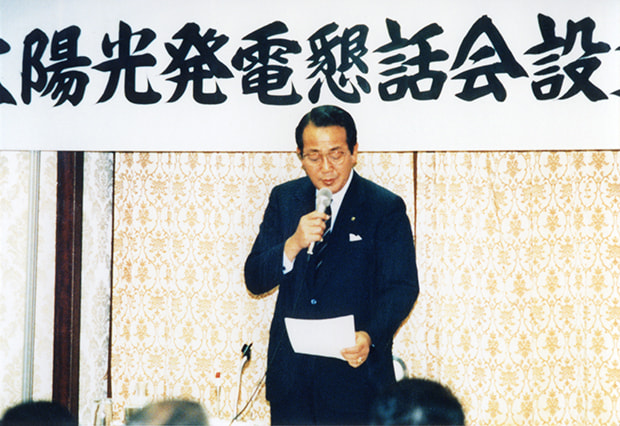
In the latter half of the 1980s, photovoltaic energy was still unfamiliar to many. Inamori thought it was important for interested parties to get together and exchange information on the development and use of technology to promote full-scale adoption of solar energy. Therefore, Inamori called upon ten companies and one organization and established the Japan Photovoltaic Energy Association.
This was a new type of industry association, consisting of manufacturers, government organizations and customers. Inamori became its first representative and served in this position for 12 years. The interaction between public and private sectors, fostered by the Japan Photovoltaic Energy Association, helped begin a new era for widespread use of photovoltaic solar cells and helped create various governmental subsidy programs.
Third Administrative Reform Council
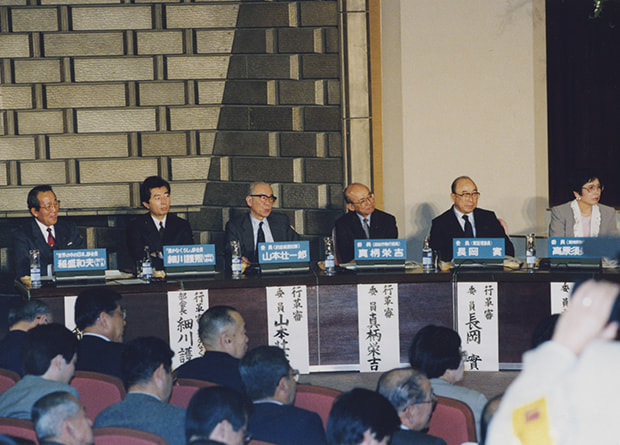
In 1991, Inamori became chairman of "Japan and the World" for the Third Administrative Reform Council (ARC). He held this post for approximately one and a half years. Council members consisted of Deputy Chair Takuma Yamamoto (chairman of Fujitsu at the time), as well as many experts in their own fields, including Taro Yayama (political analyst), Tetsundo Iwakuni (mayor of Izumo City at the time), Nobuo Matsunaga (former ambassador to the United States) and others. They held meaningful discussions on how Japanese diplomacy should be conducted, as well as on the principles of diplomacy.
Specific measures addressing globalization issues were hammered out, such as the general framework for Official Development Assistance; the standardization of administrative document sizes to A4; the extension of the passport expiration date to 10 years; the extension of the excellent driver's license expiration date to 5 years; the elimination of 6-month inspections for automobiles, and many other measures.
In 1992, he also ran the subcommittee on "A Re-Examination of the Role of the Government" for about one year and discussed how governmental bodies should appropriately conduct business. The Board, along with other Administrative Reform Councils, submitted a final proposal to the prime minister.
Civic Forums for general public
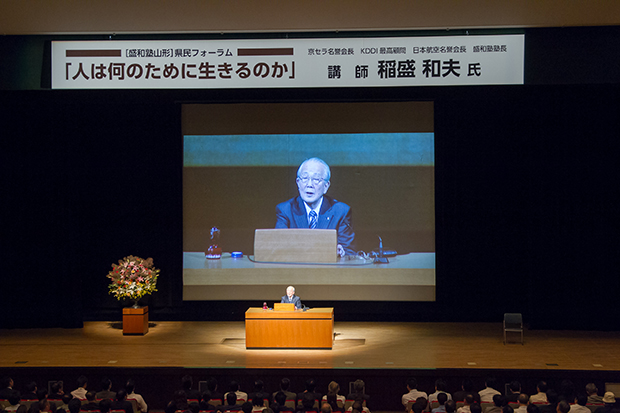
Seiwajyuku members often said they wanted the public to have the opportunity to hear Inamori Jyukucho speak in person. Inamori concurred with the idea, commenting, "If I can help to make a better society, I will do so" and voluntarily presented lectures in Civic Forums held all over the country.
In the lectures, Inamori talked about the purpose of life, explaining that we can lead a wonderful life by continually working to refine our spirit. Seiwajyuku, with branches all over the world, sponsored the Civic Forums, mainly in Japan, but also in the US and Brazil.
By December 2016, 59 Civic Forums had been held, attended by over 100,000 people. Feedback showed that many participants across all ages and genders were deeply impressed by the experience.